
Understanding the Impact of AI on Civil Liberties and Human Rights
Contents
- 1 Impact of AI on Civil Liberties and Human Rights
- 1.1 Diverse Applications of AI
- 1.2 The Data Foundation of AI
- 1.3 Privacy and Surveillance
- 1.4 Freedom of Expression and Information
- 1.5 Algorithmic Discrimination
- 1.6 Automated Decision-Making and Due Process
- 1.7 The Right to an Explanation
- 1.8 Implications for Warfare and Autonomy
- 1.9 Facial Recognition in Public Spaces
- 1.10 Predictive Policing Algorithms
- 1.11 Algorithmic Bias in Hiring
- 1.12 The Need for Transparency and Explainability
- 1.13 Bias Detection and Mitigation
- 1.14 Ethical AI Development and Deployment
- 1.15 Developing Comprehensive AI Regulations
- 1.16 Establishing Oversight and Enforcement Mechanisms
- 1.17 Fostering International Cooperation
- 1.18 Continuous Dialogue and Education
- 1.19 Prioritizing Human-Centric AI Design
- 2 FAQs
- 2.1 1. What is AI, and how is it impacting civil liberties and human rights?
- 2.2 2. What are some potential threats and concerns related to AI and human rights?
- 2.3 3. Can you provide real-world examples of AI impacting civil liberties?
- 2.4 4. What legal and ethical considerations should be taken into account to safeguard civil liberties in the age of AI?
- 2.5 5. What is the role of governments and regulatory bodies in addressing AI’s impact on human rights?
Impact of AI on Civil Liberties and Human Rights
Artificial intelligence (AI) has moved from science fiction to a pervasive force in modern life. From personal communication to national security, AI systems process vast amounts of data, influence decisions, and reshape interactions. This article explores how AI impacts civil liberties and human rights, highlighting key areas of concern and potential solutions.
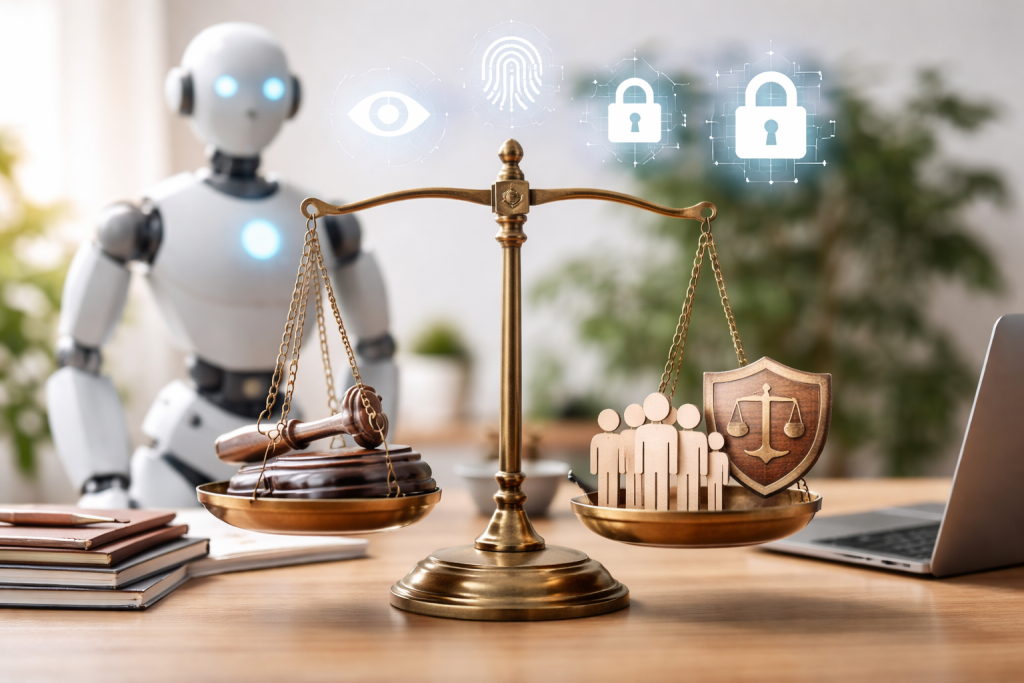
AI refers to computer systems that can perform tasks typically requiring human intelligence. These tasks include learning, problem-solving, decision-making, and pattern recognition. Current AI applications range from recommendation engines on streaming platforms to complex algorithms guiding autonomous vehicles and medical diagnostics. The increasing sophistication and integration of AI into daily life raise fundamental questions about its societal implications.
Diverse Applications of AI
Consider the AI that powers your online search results. It learns from your past queries and browsing habits, tailoring your information presentation. Similarly, AI in finance analyzes market trends to suggest investments. In healthcare, AI helps diagnose diseases by identifying patterns in medical images more quickly than humans often can. Law enforcement uses AI for predictive policing, analyzing crime data to anticipate future incidents. These examples illustrate AI’s broad reach, often operating silently in the background, shaping our experiences and the information we receive.
The Data Foundation of AI
AI systems are data-driven. They learn from the patterns and relationships within massive datasets. The quality and bias embedded in this data directly influence the AI’s output. If a dataset reflects societal biases, the AI trained on it will likely perpetuate or amplify those biases. This inherent reliance on data forms a critical juncture where AI and civil liberties intersect.
Civil liberties are fundamental freedoms guaranteed to individuals, protecting them from governmental or other arbitrary interference. These include privacy, freedom of speech, due process, and protection from discrimination. AI’s capabilities, particularly in data collection and analysis, can directly impinge upon these rights.
Privacy and Surveillance
AI systems thrive on data. This leads to concerns about personal privacy. Imagine a digital dragnet, constantly collecting information about your movements, communications, and preferences. Facial recognition technology, powered by AI, allows for mass surveillance in public spaces. This technology, capable of identifying individuals from live video feeds, blurs the line between public safety and pervasive monitoring. The constant collection and algorithmic analysis of personal data, even for seemingly innocuous purposes, creates a digital footprint that can be used to infer sensitive information about individuals, from their political affiliations to their health status.
Freedom of Expression and Information
AI influences what information we see and how we communicate. Content moderation algorithms on social media platforms, while aiming to prevent harmful content, can inadvertently suppress legitimate speech or disproportionately target certain voices. These algorithms, operating at scale, lack the nuance of human judgment, potentially leading to arbitrary censorship. Moreover, sophisticated AI-powered disinformation campaigns can manipulate public opinion, making it difficult for individuals to discern truth from falsehood, thereby undermining informed decision-making and free discourse.
Algorithmic Discrimination
As noted earlier, AI models trained on biased data can perpetuate or amplify discrimination. For example, AI algorithms used in hiring can inadvertently favor certain demographics if the training data reflects existing biases in the workforce. In the criminal justice system, predictive policing algorithms might disproportionately identify certain neighborhoods or ethnic groups as high-risk, leading to increased surveillance and arrests in those areas, regardless of actual individual intent. This creates a feedback loop where existing societal inequalities are codified and reinforced by technology.
Beyond civil liberties, AI also poses threats to fundamental human rights, including rights to equality, non-discrimination, and due process.
Automated Decision-Making and Due Process
Understanding AI’s ability to automate decision-making raises important questions about accountability and transparency. When AI systems make critical decisions that affect individuals’ lives—such as loan applications, welfare benefits, or even parole decisions—understanding how they are reached becomes paramount. The “black box” nature of some complex AI models makes it difficult to ascertain the exact reasoning behind an outcome. This lack of transparency can undermine due process, as individuals may not be able to challenge decisions effectively if the underlying logic is opaque.
The Right to an Explanation
The principle of explainable AI (XAI) addresses this concern. Individuals have a right to understand why an AI system made a particular decision, especially when that decision has significant personal consequences. Without such explanations, challenging unfair or incorrect automated decisions becomes almost impossible, effectively denying individuals their right to remedy.
Implications for Warfare and Autonomy
The development of autonomous weapons systems (AWS) presents a profound ethical challenge to human rights. These systems, once launched, can select and engage targets without further human intervention. This raises fundamental questions about accountability for civilian casualties and the very definition of humanity’s role in lethal decision-making. The prospect of machines making life-or-death decisions without human oversight or moral judgment represents a significant leap with potentially catastrophic consequences for human rights and indeed, humanity itself.
Examining specific examples brings the abstract concerns about AI’s impact on civil liberties into sharp focus.
Facial Recognition in Public Spaces
In countries like China, extensive facial recognition networks are used for surveillance, social credit systems, and tracking minority populations. While some argue these systems enhance public safety, critics point to their potential for suppressing dissent, chilling free speech, and enabling pervasive government control. Even in democratic nations, the deployment of facial recognition by law enforcement or private entities raises concerns about privacy and the erosion of anonymity in public life. Imagine walking down a street where every face is scanned and identified, linked to a digital profile. This paints a picture of a society where anonymity is a luxury, not a right.
Predictive Policing Algorithms
In various cities globally, AI-powered predictive policing tools have been implemented. These tools analyze historical crime data to predict where and when crimes are most likely to occur. However, studies have shown that these algorithms often reflect and amplify existing biases in policing. If a certain neighborhood has historically faced higher levels of police scrutiny due to racial profiling, an algorithm trained on this data might disproportionately flag that same neighborhood, leading to a self-fulfilling prophecy of increased surveillance and arrests, even if the underlying crime rates are not inherently higher.
Algorithmic Bias in Hiring
Amazon reportedly developed an AI recruiting tool that exhibited bias against women. The algorithm, trained on historical resumes submitted primarily by men, learned to penalize resumes containing words associated with women, such as “women’s chess club.” While Amazon reportedly scrapped the project, this case highlights a key danger: AI can unintentionally perpetuate and even exacerbate existing societal biases if not carefully designed and rigorously tested. This example is a stark reminder that technology is a mirror, reflecting the realities of its creators and their societies.
Addressing the challenges posed by AI requires a multi-pronged approach encompassing legal frameworks, ethical guidelines, and robust oversight.
The Need for Transparency and Explainability
One crucial step is to demand transparency in AI systems. When AI is used to make decisions impacting individuals, the logic behind those decisions must be understandable. This involves developing explainable AI (XAI) methods, moving beyond black box algorithms, and providing clear avenues for appeal and redress. This is not about understanding every line of code but about comprehending the general principles and data points that inform a decision.
Bias Detection and Mitigation
Developers and deployers of AI must actively work to identify and mitigate algorithmic bias. This involves scrutinizing training data for skewed representations, developing techniques to debias models, and conducting regular audits to ensure fairness. It’s a continuous process, not a one-time fix. Just as a gardener tends to a plant over its life, so too must we tend to AI systems to ensure they remain fair and equitable.
Ethical AI Development and Deployment
Ethical considerations should be integrated into every stage of AI development, from conception to deployment. This includes adherence to principles such as fairness, accountability, privacy by design, and human oversight. Organizations creating and deploying AI have a responsibility to conduct ethical impact assessments to foresee and address potential harms before they materialize.
Governments and international bodies play a critical role in establishing guardrails and ensuring accountability in the deployment of AI.
Developing Comprehensive AI Regulations
Existing laws, often drafted before the advent of sophisticated AI, may not adequately address the unique challenges presented by this technology. New legislation is needed to regulate the use of AI, particularly in sensitive areas like surveillance, justice, and employment. This includes establishing clear rules for data privacy, algorithmic accountability, and the responsible development of autonomous systems. The European Union’s General Data Protection Regulation (GDPR) and proposed AI Act are examples of efforts to create such regulatory frameworks.
Establishing Oversight and Enforcement Mechanisms
Beyond legislation, effective oversight and enforcement mechanisms are essential. Independent bodies should be empowered to review AI systems, investigate complaints, and impose penalties for violations of civil liberties and human rights. This requires investment in technical expertise within regulatory agencies to understand and assess complex AI systems.
Fostering International Cooperation
Given AI’s global nature, international cooperation is vital. Nations must work together to develop shared norms, standards, and regulatory approaches to prevent a “race to the bottom” in terms of ethical AI development and human rights protections.
The journey into an AI-powered future is ongoing. The challenges to civil liberties and human rights are significant, but not insurmountable.
Continuous Dialogue and Education
Cultivating an informed public discourse about AI’s societal implications is paramount. Citizens, policymakers, technologists, and ethicists must engage in continuous dialogue to understand the technology, anticipate its impacts, and collectively shape its future. Education about AI for all segments of society, from technical professionals to the general public, is crucial.
Prioritizing Human-Centric AI Design
Ultimately, the goal should be to develop and deploy AI that serves humanity, not the other way around. This means prioritizing human values, dignity, and autonomy in AI design. AI should augment human capabilities and enhance our lives, rather than diminish our rights or erode our fundamental freedoms. The path forward involves careful navigation, with human rights serving as the compass.
FAQs
1. What is AI, and how is it impacting civil liberties and human rights?
AI, or artificial intelligence, refers to the development of computer systems that can perform tasks that typically require human intelligence. AI is impacting civil liberties and human rights in various ways, such as through surveillance, privacy concerns, and potential biases in decision-making processes.
Some potential threats and concerns related to AI and human rights include the potential for discrimination and bias in AI algorithms, the erosion of privacy rights through increased surveillance, and the potential for AI to infringe on freedom of expression and association.
3. Can you provide real-world examples of AI impacting civil liberties?
Real-world examples of AI impacting civil liberties include the use of facial recognition technology for surveillance purposes, the use of AI algorithms in criminal justice systems that may perpetuate biases, and the use of AI in social media platforms to curate content and potentially limit freedom of expression.
4. What legal and ethical considerations should be taken into account to safeguard civil liberties in the age of AI?
Legal and ethical considerations to safeguard civil liberties in the age of AI include ensuring transparency and accountability in AI systems, addressing potential biases and discrimination in AI algorithms, and establishing clear regulations and guidelines for the use of AI in sensitive areas such as law enforcement and healthcare.
5. What is the role of governments and regulatory bodies in addressing AI’s impact on human rights?
Governments and regulatory bodies play a crucial role in addressing AI’s impact on human rights by enacting legislation and regulations to ensure the responsible and ethical use of AI, conducting oversight of AI systems to prevent abuses, and promoting public awareness and education about the implications of AI on civil liberties and human rights.

AI & Secure is dedicated to helping readers understand artificial intelligence, digital security, and responsible technology use. Through clear guides and insights, the goal is to make AI easy to understand, secure to use, and accessible for everyone.