
Understanding AI Surveillance: What You Need to Know as a Beginner
AI surveillance refers to the use of artificial intelligence to monitor and analyze human behavior, often without explicit consent. It has become increasingly prevalent in modern society, raising questions about privacy, ethics, and civil liberties. This article provides a foundational understanding of AI surveillance for beginners, exploring its mechanisms, applications, and consequences.
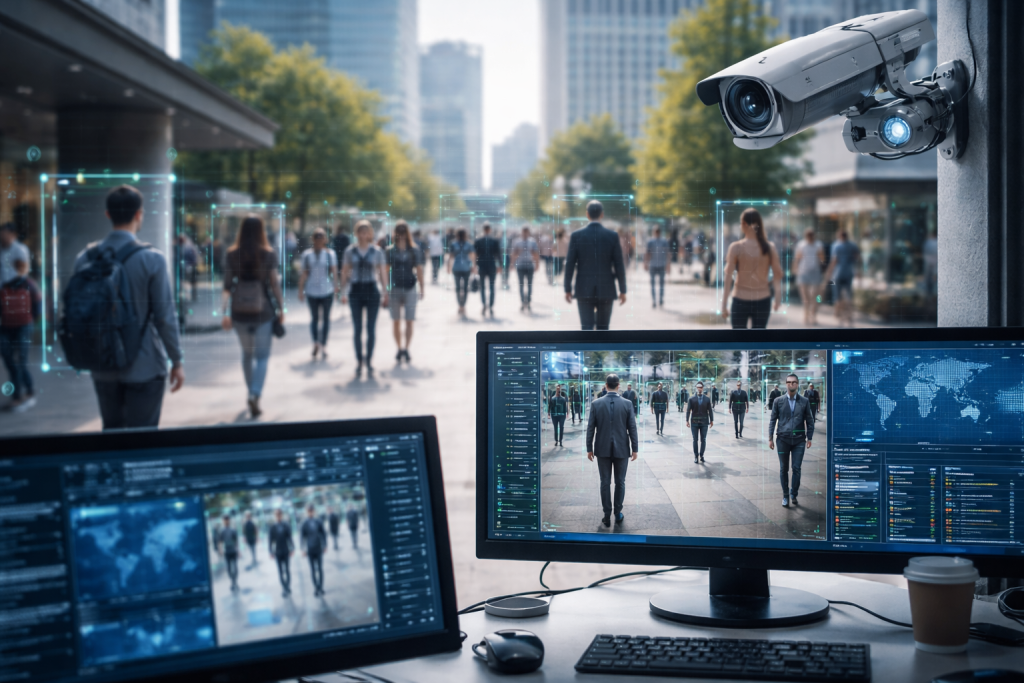
AI surveillance systems typically combine hardware, such as cameras and sensors, with sophisticated software algorithms. These algorithms process data collected from various sources, identifying patterns, recognizing individuals, and predicting actions. The goal is often to enhance security, optimize operations, or enforce regulations. Unlike traditional surveillance, which relies heavily on human observation, AI systems can process vast amounts of data continuously and identify subtle anomalies that might escape human notice. Imagine a massive spider web, where every strand is a data point, and the AI is the spider, feeling every vibration and identifying threats or patterns.
Contents
- 0.1 What is AI Surveillance?
- 0.2 Evolution of Surveillance Technologies
- 0.3 Key AI Technologies Used
- 0.4 How AI Enhances Surveillance Capabilities
- 0.5 Data Privacy and Consent
- 0.6 Bias and Discrimination
- 0.7 Scope Creep and Misuse
- 0.8 Public Safety and Law Enforcement
- 0.9 Business and Retail
- 0.10 Smart Cities and Urban Planning
- 0.11 Computer Vision
- 0.12 Machine Learning and Deep Learning
- 0.13 Data Collection and Analysis
- 0.14 Regulatory Frameworks
- 0.15 Human Rights and Civil Liberties
- 0.16 International Perspectives
- 0.17 Understanding Your Digital Footprint
- 0.18 Using Privacy-Enhancing Technologies
- 0.19 Advocating for Stronger Regulations
- 1 FAQs
- 1.1 What is AI surveillance, and how does it work?
- 1.2 What are the ethical and privacy concerns associated with AI surveillance?
- 1.3 How is AI surveillance used in different industries?
- 1.4 What are the legal implications of AI surveillance?
- 1.5 What are some tips for protecting your privacy in the age of AI surveillance?
What is AI Surveillance?
At its core, AI surveillance involves automated monitoring. This automation distinguishes it from older forms of surveillance. Instead of a security guard manually reviewing hours of footage, an AI system can flag suspicious activities in real time. This efficiency comes with a trade-off; the scale of monitoring becomes exponentially larger, creating new capabilities and new concerns. The surveillance can be overt, like security cameras in public spaces, or covert, functioning in the background of our digital lives.
Evolution of Surveillance Technologies
Surveillance has a long history, from watchtowers in ancient cities to CCTVs in modern urban environments. The integration of AI represents a major paradigm shift. Early surveillance relied on human interpretation of raw data. The advent of digital cameras and recording devices made data collection easier, but analysis remained largely manual. AI changes these circumstances by automating the analysis phase, enabling facial recognition, gait analysis, object detection, and even sentiment analysis. This evolution has transformed surveillance from a reactive tool to a proactive, predictive mechanism.
Artificial intelligence provides the analytical engine for modern surveillance. Without AI, the sheer volume of data collected by cameras and sensors would be unmanageable. AI empowers these systems to make sense of the data.
Key AI Technologies Used
Several AI technologies underpin modern surveillance systems. Facial recognition is one of the most prominent, identifying individuals from images or videos. Object detection can identify specific items, like weapons or unattended bags. Behavioral analytics can flag unusual patterns of movement or activity. Natural Language Processing (NLP) can analyze spoken or written communication for keywords or sentiments. Machine learning, a subset of AI, is crucial for training these systems. Algorithms are fed vast datasets of images or behaviors, learning to differentiate normal from abnormal, or one person from another. This learning phase is like teaching a child to recognize different animals by showing them many pictures.
How AI Enhances Surveillance Capabilities
AI enhances surveillance in several ways. Firstly, it offers speed and scale; systems can monitor thousands of cameras simultaneously. Secondly, it provides accuracy; AI can detect subtle details that humans might miss, like a specific facial expression indicating stress. Thirdly, it offers predictive capabilities; by analyzing patterns, AI can predict potential threats or future actions, moving surveillance from reaction to proactive intervention. For instance, an AI might flag a person lingering in a restricted area for an unusual duration, based on learned patterns of normal behavior.
The increasing deployment of AI surveillance systems raises substantial ethical and privacy concerns. The capabilities offered by AI can infringe on fundamental rights if not managed carefully.
Data Privacy and Consent
One primary concern is data privacy. AI surveillance collects vast amounts of personal data, including images, location data, and behavioral patterns. The question of who owns this data, how it is stored, and who has access to it is critical. Often, individuals are monitored without their explicit consent or even knowledge. This lack of transparency can erode trust and democratic values. Imagine being constantly observed through a one-way mirror, never knowing who is watching or what they are doing with the information.
Bias and Discrimination
AI algorithms are trained on data. If this data reflects existing societal biases, the AI system will perpetuate and even amplify them. For example, facial recognition systems have shown higher error rates for certain demographics, leading to misidentification and potential discrimination. These factors can result in unfair targeting of specific ethnic groups or communities, reinforcing existing inequalities. An AI system is a mirror, reflecting the quality of the data it is trained on. If the mirror is flawed, the reflection will be distorted.
Scope Creep and Misuse
Another concern is scope creep, where systems initially deployed for one purpose are gradually expanded to others, often without public debate or oversight. A system installed for traffic management might later be used for identifying protestors. The potential for misuse by authoritarian regimes or even well-intentioned but overzealous authorities is significant. The accumulation of detailed personal data creates a powerful tool that can be exploited for control or manipulation.
AI surveillance is not confined to security cameras. Its applications span various sectors, from urban management to business operations.
Public Safety and Law Enforcement
Public safety uses AI surveillance for crime prevention, suspect identification, and disaster response. Facial recognition helps identify individuals in crowds, while anomaly detection flags unusual activities in public spaces. In cities, AI monitors traffic flow, identifies accidents, and assists emergency services. Law enforcement agencies use AI to analyze large datasets of evidence, identify patterns in criminal activity, and even predict hotspots for future crimes.
Business and Retail
Businesses use AI surveillance to monitor employee productivity, prevent theft, and enhance customer experience. In retail, AI tracks customer movement, analyzes purchasing patterns, and optimizes store layouts. For example, a system might identify areas where customers linger or products that receive less attention. This data helps businesses make informed decisions about marketing and operations, often without the customer’s awareness.
Smart Cities and Urban Planning
Smart cities integrate AI surveillance to manage urban infrastructure, optimize resource allocation, and improve residents’ quality of life. This includes managing traffic lights based on real-time flow, monitoring public utilities for faults, and even detecting environmental hazards. While offering efficiency, these pervasive systems create a highly monitored environment that some find concerning.
Gaining a basic understanding of the underlying technologies helps demystify AI surveillance and appreciate its complexity.
Computer Vision
Computer vision is a field of AI that enables computers to “see” and interpret visual information. This is foundational for AI surveillance using cameras. It involves processes like image recognition, where the system identifies objects or people in an image; object tracking, where it follows the movement of an object or person; and scene understanding, where it comprehends the context of a visual scene. Algorithms are trained to distinguish between different features, much like a child learning to identify shapes.
Machine Learning and Deep Learning
Machine learning is a core component, allowing systems to learn from data without explicit programming. Deep learning, a subset of machine learning, uses artificial neural networks with multiple layers to process data. These networks can identify complex patterns that simpler algorithms might miss. For instance, deep learning models can be trained on millions of faces to recognize individuals even with variations in lighting, pose, or expression. This learning process is iterative; the more data fed into the system, the better it becomes at its task.
Data Collection and Analysis
Data collection is the initial step, involving cameras, sensors, microphones, and even digital footprints. This raw data is then fed into AI algorithms for analysis. The analysis involves identifying features, classifying objects, and detecting anomalies. The output might be an alert, a report, or a prediction. The entire process relies on robust data infrastructure and powerful computing capabilities to handle and process the enormous datasets involved.
The rapid advancement of AI surveillance has outpaced legal frameworks in many jurisdictions, leading to a complex and evolving legal landscape.
Regulatory Frameworks
Governments worldwide are grappling with how to regulate AI surveillance. Some countries have strict data protection laws, like the GDPR in Europe, which impose requirements for consent, data minimization, and transparency. Others have more permissive regulations or no specific laws addressing AI surveillance. The challenge lies in balancing public safety and security with individual rights and freedoms. Creating effective regulations requires collaboration between legal experts, technologists, and civil society.
Human Rights and Civil Liberties
AI surveillance can significantly impact human rights, including rights to privacy, freedom of assembly, and non-discrimination. The constant monitoring can create a chilling effect, deterring individuals from exercising their rights to protest or express dissent. Legal challenges often revolve around the proportionality of surveillance measures and whether less intrusive alternatives exist. The legal system acts as a crucial check on the power of these technologies.
International Perspectives
Different countries adopt varying approaches to AI surveillance, reflecting diverse political systems and cultural values. Some nations, particularly authoritarian ones, employ AI surveillance extensively for social control. Democratic nations often attempt to implement safeguards, although their effectiveness is subject to ongoing debate. The global nature of technology means that legal responses to AI surveillance often require international cooperation.
While AI surveillance is pervasive, individuals can take steps to protect their privacy.
Understanding Your Digital Footprint
Every interaction you have online or with digital devices leaves a trace. Understanding your digital footprint—the data you generate through your online activities, app usage, and smart devices—is the first step. Pay attention to the information you disclose, the permissions you give apps, and the methods used to collect and utilize your data. Think of your digital footprint as a breadcrumb trail, and know where you are leaving it.
Using Privacy-Enhancing Technologies
A range of technologies can help protect your privacy. This includes Virtual Private Networks (VPNs) to encrypt your internet traffic, privacy-focused browsers that block trackers, and end-to-end encrypted messaging services. Tools like ad blockers can also reduce the amount of data collected by websites. While not foolproof, these technologies add layers of protection against surveillance.
Advocating for Stronger Regulations
Engaging in public discourse and advocating for stronger privacy regulations is crucial. Support organizations that champion digital rights and privacy. Contact your elected representatives to express your concerns about AI surveillance and demand greater transparency and accountability from governments and corporations. Collective action can shape the legal and ethical landscape of AI surveillance. Your voice, combined with others, can be a powerful force against unchecked surveillance.
FAQs
What is AI surveillance, and how does it work?
AI surveillance refers to the use of artificial intelligence technologies to monitor and analyze people’s behavior, activities, and movements. It involves the use of advanced algorithms and machine learning to process and interpret data from various spiderweb,sources, such as video cameras, sensors, and social media platforms.
What are the ethical and privacy concerns associated with AI surveillance?
Ethical and privacy concerns in AI surveillance revolve around issues such as invasion of privacy, potential misuse of data, discrimination, and lack of transparency. There are also concerns about the potential for AI surveillance to infringe on civil liberties and human rights.
How is AI surveillance used in different industries?
AI surveillance is used in various industries such as retail, healthcare, transportation, and law enforcement. In retail, it is used for customer behavior analysis and theft prevention. In healthcare, it is used for patient monitoring and diagnosis. It is employed in transportation for safety and traffic control. It is employed in law enforcement for both investigation and crime prevention.
What are the legal implications of AI surveillance?
The legal implications of AI surveillance include issues related to data protection, consent, and the use of facial recognition technology. There are also concerns about the potential for AI surveillance to infringe on constitutional rights and civil liberties, leading to debates about the need for regulations and oversight.
What are some tips for protecting your privacy in the age of AI surveillance?
Some tips for protecting your privacy in the age of AI surveillance include being mindful of the information you share online, using privacy settings on social media platforms, being cautious about the use of smart devices, and staying informed about privacy laws and regulations. It is also important to advocate for transparency and accountability in the use of AI surveillance technologies.

AI & Secure is dedicated to helping readers understand artificial intelligence, digital security, and responsible technology use. Through clear guides and insights, the goal is to make AI easy to understand, secure to use, and accessible for everyone.