
Smart Devices and Privacy: Are You Putting Your Personal Information at Risk?
Smart devices have become commonplace in households, offering convenience and new capabilities. From voice assistants that manage schedules to security cameras that monitor homes, these devices are woven into the fabric of modern life. However, their widespread adoption raises significant questions about personal information privacy. This article explores how smart devices collect and use data, the risks involved, measures to protect information, and the evolving landscape of privacy in the age of connected technology.
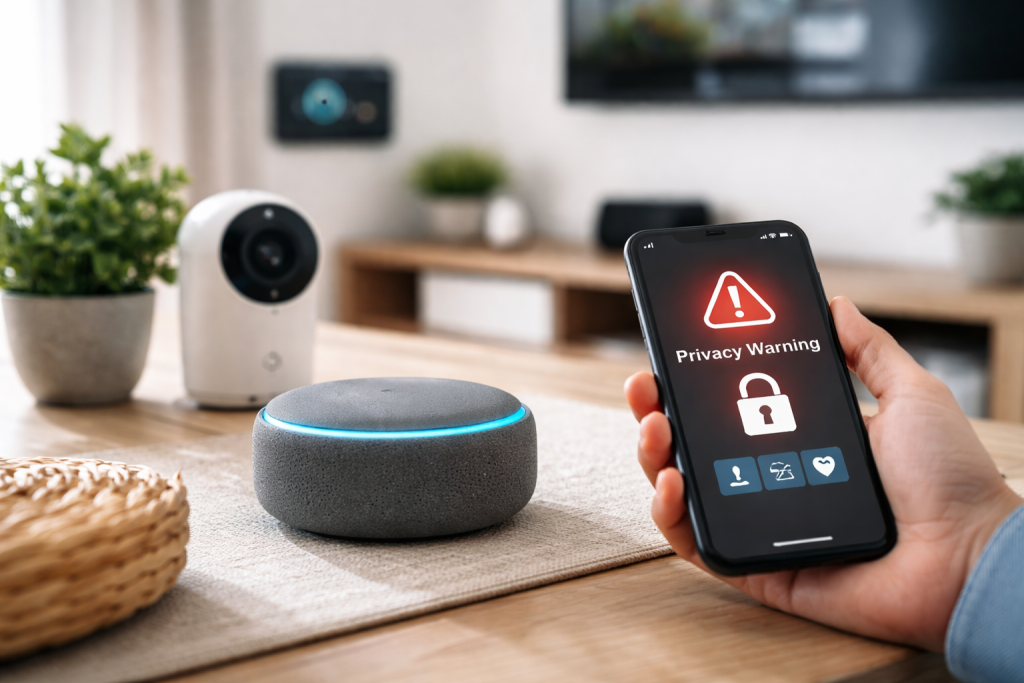
Smart devices, also known as Internet of Things (IoT) devices, are everyday objects equipped with sensors, software, and connectivity. This allows them to collect data about their environment and users andusers and to communicate with other devices and the internet. The types of data collected are diverse, depending on the device’s function. For example, a smart thermostat collects information about your home’s temperature and occupancy patterns. A smart speaker constantly listens for its wake word and records your commands. A wearable fitness tracker monitors your heart rate, step count, and sleep activity.
The data gathered by these devices serves multiple purposes. Primarily, it enables the core functionality of the device. Your smart thermostat learns your preferences to optimize energy usage. Your smart speaker needs to process your voice commands to provide responses or perform actions. Fitness trackers use your biometric data to offer insights into your health and activity levels. Beyond these direct functions, the collected data is often aggregated and analyzed by manufacturers. This analysis can be used to improve existing products, develop new ones, and understand user behavior trends.
Furthermore, data from smart devices can be used for targeted advertising. Companies may use the information gleaned from your device usage to present you with more relevant ads. For instance, if your smart speaker frequently plays music from a particular genre, you might start seeing ads for concerts or music streaming services related to that genre. In some cases, anonymized or aggregated data might be sold to third parties for market research or other commercial purposes. This data can paint a detailed picture of your habits, preferences, and even your daily routines. The data collection operates like a constant murmur in the background of your life, gathering details you might not even actively consider sharing.
Contents
- 0.1 Types of Smart Devices and Their Data Collection
- 0.2 How Data is Used and Shared
- 0.3 Data Breaches and Security Vulnerabilities
- 0.4 Lack of Transparency and Control Over Data
- 0.5 Network Security Best Practices
- 0.6 Managing App Permissions and Data Sharing
- 0.7 Key Privacy Regulations and Their Scope
- 0.8 Enforcement and Consumer Rights
- 0.9 Evaluating Device Functionality vs. Privacy Implications
- 0.10 The Importance of Informed Consent
- 0.11 Making Conscious Trade-offs
- 0.12 The Role of User Education and Awareness
- 0.13 Emerging Technologies and Their Privacy Implications
- 0.14 The Evolving Role of Regulation and Consumer Action
- 1 FAQs
- 1.1 1. What are smart devices, and how do they collect personal information?
- 1.2 2. What are the potential risks of using smart devices in terms of privacy?
- 1.3 3. How can individuals protect their personal information on smart devices?
- 1.4 4. What are the legal implications of privacy laws on smart device usage?
- 1.5 5. How can consumers make informed choices when using smart devices?
Types of Smart Devices and Their Data Collection
Smartphones and tablets are perhaps the most ubiquitous smart devices, collecting vast amounts of personal data. This includes location, browsing history, app usage, contacts, and communication logs. Smart home devices represent another significant category. This encompasses smart speakers, smart televisions, smart light bulbs, smart refrigerators, and smart security cameras. Each of these, in its own way, contributes to the data flowing from your home. Smart security cameras, for instance, can record video and audio, potentially capturing sensitive moments. Smart appliances might track your consumption patterns, meal preparation habits, or even the contents of your refrigerator.
Wearable technology, such as smartwatches and fitness trackers, collects personal health data. This includes heart rate, activity levels, sleep patterns, and in some cases, more detailed biometric information like blood oxygen levels or ECG readings. Connected cars are also a growing area, collecting data on driving habits, locations, vehicle performance, and even in-car conversations. The data collected by these vehicles can be extensive, from routes taken to speed and braking patterns.
The processed data from smart devices can be used by manufacturers in several ways. It can fuel algorithms to personalize user experiences, making devices more responsive and intuitive. For example, a smart TV might recommend shows based on your viewing history. AggregatedAggregated data can inform product development, helping companies understand what features users want and how they use their devices. This can lead to more refined and useful products.
However, the sharing of this data with third parties is a more contentious issue. While some data sharing is transparently disclosed in privacy policies, the extent and nature of this sharing can be complex. Manufacturers may partner with advertisers, data brokers, or analytics firms. This allows these third parties to build detailed profiles of individuals for marketing or other purposes. The data might be sold, licensed, or shared through data partnerships. This creates a complex ecosystem where your personal information can travel beyond the direct control of the device manufacturer and potentially reach entities you have never directly interacted with. The chain of data handoffs can be long and opaque, making it difficult to trace exactly where your information ends up.
The pervasive data collection by smart devices introduces several privacy concerns. One of the primary risks is the potential for unauthorized access to your personal information. Smart devices, like any internet-connected device, can be vulnerable to hacking. If a device’s security is compromised, sensitive data such as browsing history, voice recordings, family routines, or even live video feeds could be exposed to malicious actors. This could lead to identity theft, stalking, or other forms of exploitation.
Another significant concern is the potential for misuse of your data by the companies that collect it. While privacy policies may outline how data is used, these policies can be lengthy, complex, and subject to change. Users may not fully understand what data is being collected, how it is being used, or with whom it is being shared. This lack of transparency can lead to a situation where your personal information is being leveraged in ways you never anticipated or consented to. For instance, data might be used to infer sensitive characteristics about you, such as your political leanings, health status, or financial situation, which could then be used for discriminatory purposes.
The aggregation of data from multiple smart devices can create a highly detailed and intimate portrait of your life. Imagine a mosaic, where each smart device contributes a small tile. Together, they could reveal not just what you do, but when you do it, who you are with, and what you are thinking about. This comprehensive data profile can feel invasive, offering insights into your private life that extend far beyond what you might willingly disclose. The cumulative effect of this pervasive data collection can contribute to a sense of being constantly observed, eroding personal autonomy and the feeling of a private space.
Data Breaches and Security Vulnerabilities
The security of smart devices is a critical issue. Many devices are manufactured with less robust security measures than traditional computing devices, making them easier targets for cyberattacks. Default passwords that are rarely changed, unencrypted data transmission, and delayed or nonexistent software updates can all create openings for hackers. A successful data breach can expose a significant amount of personal information, including credentials, financial details, and even personally identifiable information.
The consequences of such breaches can be far-reaching. For individuals, it can mean identity theft, financial fraud, and reputational damage. For organizations that manufacture or deploy these devices, it can lead to significant financial penalties, legal liabilities, and a loss of customer trust. The interconnected nature of many smart devices also means that a vulnerability in one device could potentially be used to gain access to other devices on the same network, creating a domino effect of security risks.
Lack of Transparency and Control Over Data
A recurring theme in privacy discussions surrounding smart devices is the lack of transparency and user control. Many consumers are unaware of the full extent of data being collected by their devices ordevices or how that data is being processed and shared. Privacy policies are often written in legalistic language that is difficult for the average user to understand. This means that consent, when given, may not be truly informed.
Furthermore, users often have limited options for controlling the data collected by their devices. While some devices offer settings to limit data collection or disable certain features, these options may not be comprehensive or easily accessible. The “black box” nature of many algorithms that process user data further exacerbates this issue, as it’s difficult to understand how decisions are being made based on your information. This can leave users feeling powerless, with their personal information being a commodity they implicitly give away without full understanding or recourse. The inability to truly opt outopt out of certain data collection without sacrificing essential functionality creates a trap where convenience comes at the cost of privacy.
Protecting your personal information on smart devices requires a proactive approach and vigilant attention to security. One of the most crucial steps is to change default passwords immediately. Many devices come with generic, easily guessable passwords. Replace these with strong, unique passwords that are difficult to crack. Consider using a password manager to generate and store complex passwords for each of your devices.
Another important measure is to keep your devices updated. Manufacturers often release software updates to patch security vulnerabilities. Ensure that automatic updates are enabled or regularly check for and install updates manually. This is akin to patching cracks in a dam; neglecting it can lead to a flood of information being exposed.
It’s also wise to review privacy settings regularly. Most smart devices and their associated apps offer privacy settings. Take the time to explore these settings and configure them to your comfort level. Limit data collection where possible, disable unnecessary features, and be mindful of the permissions you grant to apps. Understand what data each setting is controlling.
Network Security Best Practices
Securing your home Wi-Fi network is fundamental to protecting your smart devices. Use a strong and unique password for your Wi-Fi router. Avoid using default network names (SSIDs),(SSIDs), and consider enabling WPA3 encryption if your router supports it. Regularly change your Wi-Fi password.
Isolate smart devices on a separate network if possible. Many routers offer a guest network feature. By connecting smart devices to a guest network, you can create a barrier between them and your main network, which likely contains more sensitive information like your computers and smartphones. This means if one smart device is compromised, it’s harder for an attacker to pivot to your other devices.
Be cautious about connecting to public Wi-Fi networks with your smart devices, especially for initial setup or when performing sensitive tasks. Public networks are often less secure and can be more susceptible to man-in-the-middle attacks, where an attacker intercepts your data.
Managing App Permissions and Data Sharing
When installing apps for your smart devices, pay close attention to the permissions they request. Does a smart light bulb app really need access to your contacts or location? Grant only the permissions that are essential for the app’s functionality. You can usually manage these permissions within your smartphone or tablet’s settings.
Understand your device manufacturer’s privacy policy. While often dense, these policies outline how your data is collected, used, and shared. Look for information on data retention policies and whether your data is sold or shared with third parties. If the policy is vague or concerning, consider alternative devices.
Consider disabling features you don’t use. If your smart TV has a built-in microphone that you never use for voice commands, consider disabling it in the device settings. Every feature that collects data is a potential entry point for privacy risks. Think of disabling unused features as closing unnecessary doors in your house.
The growing concerns around smart device privacy have prompted governments worldwide to enact and strengthen privacy laws. These regulations aim to provide consumers with greater rights and control over their personal information. One of the most influential privacy laws is the General Data Protection Regulation (GDPR) in the European Union. The GDPR grants individuals rights such as the right to access their data, the right to rectification, the right to erasure (the “right(the “right to be forgotten”), and the right to restrict processing. It also imposes strict obligations on organizations regarding the processing of personal data, including requirements for consent, data minimization, and data security.
In the United States, privacy regulations vary by state, with the California Consumer Privacy Act (CCPA) and(CCPA) and its successor,, the California Privacy Rights Act (CPRA), being among the most comprehensive. These laws grant California residents rights similar to those under GDPR, including the right to know what personal information is collected, the right to delete it, and the right to opt out of its sale. Other states are following suit, creating a patchwork of privacy protections across the country.
These legal frameworks have a direct impact on how smart device manufacturers and service providers operate. They are compelled to be more transparent about their data collection practices, obtain explicit consent for data processing, and provide mechanisms for consumers to exercise their privacy rights. Failure to comply with these laws can result in substantial fines and reputational damage. As technology evolves, so too do the legal frameworks designed to govern it. These laws are the guardrails that attempt to keep the rapid development of smart technology from veering off into a privacy free-for-all.
Key Privacy Regulations and Their Scope
Beyond GDPR and CCPA/CPRA, other significant privacy regulations are emerging globally. For instance, Brazil’s Lei Geral de Proteção de Dados (LGPD) shares many similarities with GDPR. Canada has its Personal Information Protection and Electronic Documents Act (PIPEDA). Many countries are actively reviewing or developing their own data protection legislation, reflecting a global consensus on the importance of safeguarding personal information.
These regulations often define personal data broadly, encompassing information that can identify an individual, directly or indirectly. This includes names, addresses, email addresses, IP addresses, device identifiers, location data, biometric data, and even inferred information about preferences and habits. The scope of these laws means that nearly all data collected by smart devices can potentially fall under their purview.
Enforcement and Consumer Rights
Enforcement of these privacy laws is crucial for their effectiveness. Regulatory bodies are tasked with investigating potential violations and imposing penalties on non-compliant organizations. Consumers can play a role by reporting violations and exercising their rights. For example, if you believe a company is not handling your data appropriately, you may have the right to file a complaint with the relevant data protection authority.
Understanding your rights under these laws is empowering. You have the right to request details about the data a company holds about you, to ask for it to be deleted, and to opt out of certain forms of data processing or sale. These rights provide a degree of control in a landscape where your digital footprint can otherwise feel vast and unmanageable. The legal landscape acts as a societal muscle, flexing to protect individuals in the digital realm.
Becoming an informed consumer is paramount in navigating the world of smart devices and protecting your privacy. The first step is to understand what data a device collects and why. Before purchasing a smart device, take the time to research its features and read its privacy policy. Look for clear explanations of data collection practices and how the data will be used. If the information provided is vague or concerning, it may be wise to consider a different product.
Read reviews from reputable sources that focus on privacy and security aspects of smart devices. Tech reviewers and consumer advocacy groups can offer valuable insights into a device’s potential privacy implications. Don’t solely rely on marketing materials, which often highlight benefits while downplaying privacy risks.
Be skeptical of “free” services. Many smart devices and their associated platforms are effectively “paid” for by your data. If a device or service is offered at no cost, consider what the company gains in return, which is often your personal information. This is a trade-off that needs to be carefully considered.
Evaluating Device Functionality vs. Privacy Implications
When considering a smart device, weigh its convenience and functionality against its potential privacy risks. Ask yourself if the benefits of a particular device outweigh the amount of personal data it collects and the potential exposure of that data. For example, a smart door lock might offer convenience, but it also collects data about who enters and leaves your home and when. Is that level of tracking essential for your needs?
Prioritize devices from manufacturers with a strong track record for privacy and security. Some companies are more transparent and responsible with user data than others. Research a company’s history of data breaches and their commitment to user privacy. This due diligence is like choosing a trustworthy guardian for your digital life.
Educate yourself about common privacy threats. Understanding phishing attempts, malware, and common hacking techniques related to smart devices can help you avoid pitfalls. The more you know about how your data can be compromised, the better equipped you will be to protect it.
The Importance of Informed Consent
Informed consent is the cornerstone of privacy. This means understanding what you are agreeing to when you accept terms of service or privacy policies. If you don’t understand them, don’t hesitate to seek clarification or seek out devices with more accessible policies. True informed consent requires clarity and comprehension, not just a hasty click to proceed.
Regularly review your connected devices and associated accounts. Periodically audit the smart devices in your home and the apps you use. Unplug or uninstall devices you no longer use and review the permissions granted to apps. This ongoing vigilance is like tending to a garden, ensuring that unwanted growth doesn’t encroach on your privacy.
The allure of smart devices lies in their ability to simplify our lives and enhance our daily routines. However, this convenience often comes with a trade-off in terms of personal privacy. Finding the right balance between these two aspects requires a conscious and deliberate approach. It’s not about abandoning smart technology altogether, but rather about using it mindfully and making informed decisions. This is not a simple matter of choosing one over the other, but rather a delicate dance between two competing needs.
One approach is to prioritize functionality based on necessity. Consider whether a smart version of a device is truly necessary or if a traditional, non-connected alternative would suffice. For instance, while a smart thermostat can offer energy savings and remote control, a basic programmable thermostat might offer sufficient control for many users without the associated privacy concerns.
Segment your smart device usage. Not all smart devices pose the same level of risk. Devices that collect sensitive personal health data or provide access to your home’s intimate details might warrant a higher degree of caution than a smart light bulb that simply controls illumination. You can choose to embrace smart technology in less sensitive areas of your life while being more conservative with devices that access your most private information.
Making Conscious Trade-offs
Consumers must be willing to make conscious trade-offs. This might mean accepting a slightly less convenient experience in exchange for enhanced privacy. For example, you might choose to manually adjust your smart lights rather than enabling voice control for every command if you are concerned about the device constantly listening. Or, you might opt for a smart security camera that stores footage locally rather than relying on cloud storage, even if local storage is slightly less user-friendly.
Educate family members about smart device privacy. If others in your household use smart devices, ensure they understand the privacy implications and follow best practices for data security. A smart home is only as secure as its weakest link, and that includes the users.
Support companies that prioritize privacy. As consumers, your purchasing decisions can influence the market. By choosing devices from manufacturers that demonstrate a commitment to strong privacy practices and transparent data handling, you can encourage others to follow suit. This collective action can drive positive change in the industry.
The Role of User Education and Awareness
Ultimately, finding the right balance hinges on increased user education and awareness. As consumers become more informed about the risks and benefits of smart devices, they can make more empowered choices. This involves ongoing learning about new technologies, evolving privacy threats, and the legal frameworks designed to protect them. The digital landscape is constantly shifting, and staying informed is akin to continuously updating your map in an ever-changing territory.
The trajectory of smart device adoption suggests that their role in our lives will only continue to expand. As artificial intelligence and machine learning become more sophisticated, smart devices will become even more capable of collecting, analyzing, and acting upon personal data. This evolution presents both exciting possibilities and significant challenges for personal information security. The future privacy landscape will likely be shaped by the interplay between technological advancement and our collective response to it.
One significant trend is the increasing integration of edge computing in smart devices. This means that some data processing will occur directly on the device itself, rather than being sent to the cloud. While this can improve speed and reduce latency, it also means that sensitive data might be processed and potentially stored locally, raising new questions about on-device security and user control. This shift is like moving the processing plant closer to the source of the raw material, with implications for how that material is handled.
Furthermore, the proliferation of biometric data collection by smart devices, such as facial recognition, fingerprint scanning, and gait analysis, introduces new privacy dimensions. While these technologies offer enhanced security and personalization, they also collect highly sensitive and immutable forms of personal identification. The potential for misuse or large-scale breaches of this data is a significant concern for the future.
Emerging Technologies and Their Privacy Implications
The development of new smart technologies, such as advanced sensors, self-driving cars, and smart city infrastructure, will further amplify the amount of data collected about individuals. As our environments become more intelligent and interconnected, the digital footprint we leave behind will become increasingly vast and detailed. Understanding the privacy implications of these emerging technologies before they become mainstream will be crucial.
The concept of digital identity will also become more central. Smart devices will increasingly be used to authenticate and identify individuals, raising questions about who controls this digital identity and how it is protected. The potential for misuse of a compromised digital identity could have profound consequences.
The Evolving Role of Regulation and Consumer Action
The future of privacy in the age of smart devices will undoubtedly involve an ongoing evolution of legal and regulatory frameworks. As technology advances, laws will need to adapt to address new forms of data collection and potential privacy risks. Consumer action will also play a vital role. Continued advocacy, informed purchasing decisions, and active engagement with privacy rights will be essential in shaping a future where smart technology serves humanity without compromising fundamental privacy. The ongoing dialogue between technological innovation, legal oversight, and consumer vigilance will determine the ultimate balance between the promise of connected convenience and the imperative of personal privacy.
FAQs
1. What are smart devices, and how do they collect personal information?
Smart devices are electronic devices that can connect, interact, and share data with other devices or networks. They collect personal information through various means such as sensors, cameras, microphones, and user input. This information can include location data, browsing history, and even conversations.
2. What are the potential risks of using smart devices in terms of privacy?
The potential risks of using smart devices include unauthorized access to personal information, data breaches, identity theft, and surveillance. Additionally, smart devices may also share personal information with third parties for targeted advertising or other purposes without the user’s explicit consent.
3. How can individuals protect their personal information on smart devices?
Individuals can protect their personal information on smart devices by regularly updating device software, using strong and unique passwords, enabling two-factor authentication, being cautious about granting permissions to apps, and considering using privacy-focused devices or services.
4. What are the legal implications of privacy laws on smart device usage?
Privacy laws such as the General Data Protection Regulation (GDPR) in the European Union and the California Consumer Privacy Act (CCPA) in the United States impose requirements on how personal information is collected, used, and shared by smart devices. These laws also give individuals certain rights and protections regarding their personal information.
5. How can consumers make informed choices when using smart devices?
Consumers can make informed choices when using smart devices by reading privacy policies, understanding the data collection and sharing practices of the devices and apps they use, considering privacy and security features before making a purchase, and staying informed about privacy issues and best practices.

AI & Secure is dedicated to helping readers understand artificial intelligence, digital security, and responsible technology use. Through clear guides and insights, the goal is to make AI easy to understand, secure to use, and accessible for everyone.