
AI Tools Risk Assessment: A Step-by-Step Guide for Businesses
Contents
- 1 AI Tools Risk Assessment
- 1.1 Why Risk Assessment is Crucial for AI Integration
- 1.2 Regulatory Scrutiny and Public Trust
- 1.3 Data-Related Risks
- 1.4 Algorithmic and Model-Related Risks
- 1.5 Operational and Interaction Risks
- 1.6 Define Scope and Objectives
- 1.7 Identify and Categorize Risks
- 1.8 Analyze and Evaluate Risks
- 1.9 Develop Risk Treatment Strategies
- 1.10 Document and Report
- 1.11 Implementing Controls and Safeguards
- 1.12 Establishing Monitoring and Review Mechanisms
- 1.13 Integrating into the AI Development Lifecycle
- 1.14 Assigning Roles and Responsibilities
- 1.15 Training and Awareness
- 1.16 Regular Audits and Performance Monitoring
- 1.17 Incident Response Planning
- 1.18 Staying Abreast of AI Advancements and Regulatory Changes
- 1.19 Financial Services and Fraud Detection
- 1.20 Healthcare and Diagnostic Tools
- 2 FAQs
- 2.1 1. What is AI Tools Risk Assessment, and why is it important for businesses?
- 2.2 2. What are the potential risks associated with AI tools in business operations?
- 2.3 3. What is the step-by-step process for conducting AI Tools Risk Assessment in businesses?
- 2.4 4. How can businesses mitigate risks and develop risk management strategies for AI tools?
- 2.5 5. Can you provide examples of successful AI tool risk assessments in businesses?
AI Tools Risk Assessment
AI tools are increasingly integrated into business operations. This integration brings benefits but also introduces new risks. An organized approach to identifying, analyzing, and mitigating these risks is essential for responsible AI deployment. This guide outlines the process of AI tool risk assessment for businesses.
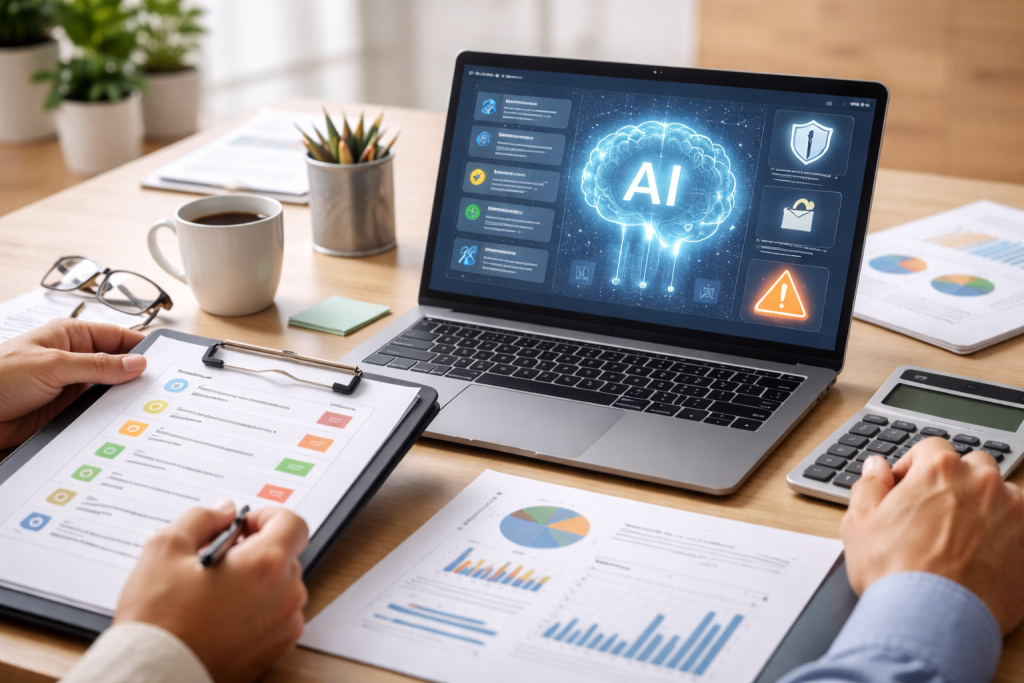
The widespread adoption of artificial intelligence tools transforms how businesses operate. From automating customer service to optimizing supply chains, AI offers significant advantages. However, like any powerful technology, AI tools carry inherent risks. Ignoring these risks is akin to building a house without considering the foundation; the structure may appear sound but is vulnerable to collapse. A comprehensive risk assessment helps businesses identify potential vulnerabilities before they manifest as serious problems. This proactive approach safeguards reputation, financial stability, and operational continuity.
Why Risk Assessment is Crucial for AI Integration
Without a structured risk assessment, businesses might deploy AI tools that behave unexpectedly. Such behavior can lead to operational failures, data breaches, or biased outcomes. Consider an AI-powered hiring tool that systematically discriminates against certain demographics. The legal and reputational consequences for the responsible company would be severe. A robust risk assessment acts as a preventative measure, allowing businesses to understand the potential downsides before committing resources and relying on these tools. It fosters trust among stakeholders and demonstrates a commitment to ethical and responsible technology use.
Regulatory Scrutiny and Public Trust
Governments and regulatory bodies worldwide are developing frameworks for AI governance. Compliance with these emerging regulations often necessitates a demonstrable understanding of AI-related risks and their mitigation. Businesses that proactively assess and manage AI risks are better positioned to meet these compliance requirements. Furthermore, public trust in AI is fragile. High-profile failures or misuse of AI tools can erode this trust, impacting a company’s brand and customer loyalty. A transparent and thorough risk assessment process helps businesses build and maintain public confidence in their AI endeavors.
AI tools present various risk categories. These risks can originate from the data used to train the AI, the algorithms themselves, the operational environment, or the human interaction with the system. A comprehensive identification process considers all these angles.
Data-Related Risks
The quality and nature of the data fed into an AI system directly impact its performance and reliability.
Data Bias
If training data contains inherent biases, the AI model will learn and perpetuate those biases. For example, an AI designed for loan approvals trained on historical data reflecting societal discrimination might unfairly reject applications from certain groups. Businesses must scrutinize their data sources for potential biases, ensuring representativeness and fairness.
Data Privacy and Security
AI systems often process vast amounts of sensitive data. Inadequate data protection measures can lead to data breaches, violating privacy regulations and damaging customer trust. Secure data storage, anonymization techniques, and compliance with data protection laws like GDPR are critical.
Data Quality and Integrity
Inaccurate, incomplete, or corrupted data can lead to flawed AI outputs. An AI system making predictions based on faulty sensor readings could recommend incorrect actions. Data validation and cleansing are continuously required to ensure data integrity.
Algorithmic and Model-Related Risks
Beyond data, the AI model itself can introduce risks.
Model Opacity (Black Box Problem)
Some complex AI models, especially deep learning networks, are difficult to interpret. Understanding why an AI makes a particular decision can be challenging. This lack of transparency, often called the “black box problem,” hinders auditing, debugging, and explaining AI behavior to affected individuals.
Model Robustness and Adversarial Attacks
AI models can be vulnerable to deliberate manipulation. Adversarial attacks involve subtle changes to input data that trick an AI into making incorrect classifications. For instance, modified signs could confuse an autonomous vehicle. Businesses need to assess the model’s resilience against such attacks.
Algorithmic Bias
Even with clean data, algorithmic design choices can introduce bias. The way an algorithm weighs different features or makes trade-offs can lead to unfair outcomes. Regular auditing of model outputs for disparate impact is essential.
Operational and Interaction Risks
The environment in which AI tools operate and how humans interact with them also present risks.
System Integration Failures
AI tools rarely operate in isolation. Their integration with existing IT infrastructure can lead to compatibility issues, system crashes, or unintended interactions. Thorough testing of integrated systems is paramount.
Over-reliance and Automation Bias
Humans may over-rely on AI systems, even when the AI provides incorrect or suboptimal advice. This “automation bias” can lead to reduced human critical thinking and decision-making errors. Designing AI systems to provide transparency and allow human override can mitigate this.
Misuse and Unintended Consequences
AI tools, like any technology, can be misused for malicious purposes. Additionally, even with good intentions, an AI system might produce unintended negative consequences not foreseen during development. Identifying potential misuse cases and conducting impact assessments are necessary.
A structured process ensures all critical aspects of AI risk are considered systematically.
Define Scope and Objectives
Clearly define which AI tools and business processes are under assessment. Establish the goals of the risk assessment, such as identifying critical vulnerabilities or meeting regulatory requirements.
Identify and Categorize Risks
Using the categories outlined above (data, algorithmic, operational), identify specific risks relevant to the AI tools in scope. Document these risks, ensuring clarity and detail.
Analyze and Evaluate Risks
For each identified risk, assess its likelihood and potential impact. Likelihood can be qualitative (e.g., low, medium, high) or quantitative (e.g., probability percentage). Impact refers to the consequences if the risk materializes (e.g., financial loss, reputational damage, legal penalties, ethical concerns). Combine likelihood and impact to determine a risk level (e.g., low, moderate, severe). Prioritize risks based on their severity. Resources are finite, so focusing on the most significant threats first is crucial.
Develop Risk Treatment Strategies
Once risks are evaluated, formulate strategies to address them. These fall into four main categories:
Risk Avoidance
Eliminating the risk by not engaging in the activity or using the AI tool. This is often not practical if the AI tool offers significant business value.
Risk Reduction
Implementing controls to decrease the likelihood or impact of the risk. Examples include improved data validation, model testing, or enhanced security measures.
Risk Transfer
Shifting the financial burden of the risk to a third party, often through insurance.
Risk Acceptance
Acknowledging the risk and deciding to take no further action, typically for low-priority risks where mitigation costs outweigh potential impact.
Document and Report
Maintain a detailed record of the entire assessment process. This includes identified risks, their analysis, proposed mitigation strategies, and assigned responsibilities. A clear report provides transparency and facilitates communication with stakeholders.
Effective risk management involves implementing the chosen strategies and continuously monitoring their efficacy. It’s a dynamic process, not a one-time event.
Implementing Controls and Safeguards
This involves putting the risk reduction strategies into practice. For data bias, it might mean creating robust data pipelines with bias detection algorithms. For model opacity, it could involve using explainable AI (XAI) techniques to provide insights into model decisions. For security, it means deploying encryption, access controls, and regular penetration testing.
Establishing Monitoring and Review Mechanisms
Risk management is not static. AI models degrade over time, new threats emerge, and regulatory landscapes change. Implementing continuous monitoring of AI tool performance, data drift, and security vulnerabilities is essential. Regular reviews of the entire risk assessment framework should occur, perhaps annually or whenever significant changes are made to AI systems or business operations.
Integrating risk assessment into the business fabric is vital for its success. This requires organizational commitment and clear responsibilities.
Integrating into the AI Development Lifecycle
Risk assessment should not be an afterthought. It must be woven into every stage of the AI development lifecycle, from conception and design to deployment and maintenance. This “security by design” and “ethics by design” approach ensures risks are considered early when they are easier and less costly to address.
Assigning Roles and Responsibilities
Clearly define who is responsible for what in the risk assessment process. This includes risk owners, teams responsible for implementing controls, and individuals overseeing continuous monitoring. A dedicated AI ethics committee or a cross-functional risk assessment team can be valuable.
Training and Awareness
Employees interacting with AI tools or involved in their development must understand AI risks and their role in managing them. Regular training and awareness programs can foster a risk-aware culture throughout the organization.
The operational environment of AI is dynamic. Continuous vigilance is necessary to stay ahead of emerging risks.
Regular Audits and Performance Monitoring
Scheduled audits of AI system performance, fairness metrics, and adherence to ethical guidelines are crucial. Monitoring for data drift, concept drift, and model decay helps identify when an AI model’s performance degrades or its operating environment changes substantially.
Incident Response Planning
Despite best efforts, risks can materialize. A predefined incident response plan for AI failures, data breaches, or biased outcomes allows for swift and effective action, minimizing damage. This plan should include communication strategies, remediation steps, and post-incident analysis.
Staying Abreast of AI Advancements and Regulatory Changes
The field of AI evolves rapidly. New techniques, potential vulnerabilities, and regulatory requirements emerge constantly. Businesses must dedicate resources to track these developments and adapt their risk assessment frameworks accordingly. This is like a captain navigating a ship; they must constantly consult new charts as the sea changes.
While specific company details are often proprietary, general examples illustrate effective risk assessment.
Financial Services and Fraud Detection
A large bank deployed an AI system for real-time fraud detection. Their risk assessment identified potential for false positives (legitimate transactions flagged as fraud) and algorithmic bias against certain demographics. To mitigate this, they implemented rigorous testing with diverse datasets, developed explainable AI components to justify flagged transactions, and included human-in-the-loop oversight for all high-value alerts. Their continuous monitoring includes feedback loops from customer service to refine the model’s accuracy and fairness.
Healthcare and Diagnostic Tools
A medical imaging company developed an AI tool to assist radiologists in detecting anomalies. Their risk assessment focused on accuracy, reliability, and the potential for misdiagnosis. They established stringent validation protocols using anonymized patient data, ensured compliance with medical device regulations, and designed the tool as an assistive aid rather than a sole diagnostic decision-maker, emphasizing human clinician oversight. Regular performance reviews compared AI suggestions with expert diagnoses, leading to iterative model improvements.
These examples highlight the diverse nature of AI risks and the tailored approaches required for their effective management. A systematic and ongoing commitment to AI tools risk assessment is not merely a compliance burden but a strategic imperative for businesses seeking to leverage AI responsibly and sustainably.
FAQs
1. What is AI Tools Risk Assessment, and why is it important for businesses?
AI Tools Risk Assessment is the process of evaluating potential risks associated with the use of AI tools in business operations. It is important for businesses because it helps identify and mitigate potential risks, such as data privacy breaches, algorithmic bias, and system failures, which can have significant financial and reputational impacts.
2. What are the potential risks associated with AI tools in business operations?
Potential risks associated with AI tools in business operations include data privacy breaches, algorithmic bias, system failures, lack of transparency, and regulatory non-compliance. These risks can lead to financial losses, damage to reputation, and legal consequences for businesses.
3. What is the step-by-step process for conducting AI Tools Risk Assessment in businesses?
The step-by-step process for conducting AI Tools Risk Assessment in businesses involves identifying AI tool usage, assessing potential risks, evaluating the impact of risks, developing risk management strategies, and implementing continuous monitoring and evaluation practices. This process helps businesses proactively manage and mitigate AI tool-related risks.
4. How can businesses mitigate risks and develop risk management strategies for AI tools?
Businesses can mitigate risks and develop risk management strategies for AI tools by implementing data privacy measures, conducting algorithmic bias audits, establishing contingency plans for system failures, ensuring transparency in AI tool usage, and staying updated with regulatory requirements. These strategies help businesses effectively manage and mitigate potential risks associated with AI tools.
5. Can you provide examples of successful AI tool risk assessments in businesses?
Examples of successful AI tools for risk assessment in businesses include financial institutions using AI tools to detect fraudulent activities while ensuring data privacy compliance, healthcare organizations using AI tools for patient diagnosis with measures to address algorithmic bias, and e-commerce companies using AI tools for personalized recommendations while maintaining transparency in their usage. These examples demonstrate how businesses can effectively assess and manage AI tool-related risks.

AI & Secure is dedicated to helping readers understand artificial intelligence, digital security, and responsible technology use. Through clear guides and insights, the goal is to make AI easy to understand, secure to use, and accessible for everyone.