
Unraveling the Power of AI: Why It’s Important to Understand its Impact Today
Contents
- 1 Unraveling the Power of AI
- 1.1 Distinguishing AI Subfields
- 1.2 AI’s Fundamental Principles
- 1.3 AI in Healthcare
- 1.4 AI in Finance
- 1.5 AI in Manufacturing and Logistics
- 1.6 Bias and Fairness in AI
- 1.7 Privacy and Data Security
- 1.8 Job Displacement and the Future of Work
- 1.9 Enhanced Decision-Making
- 1.10 Innovation and Product Development
- 1.11 Operational Efficiency and Cost Reduction
- 1.12 Empowering the Workforce
- 1.13 Informed Public Discourse
- 1.14 Addressing Grand Challenges
- 1.15 Collaborative Human-AI Systems
- 1.16 Overcoming Technical and Data Challenges
- 1.17 Managing Organizational Change
- 2 FAQs
- 2.1 1. What is artificial intelligence (AI), and why is it important to understand its impact today?
- 2.2 2. How is AI influencing various industries and revolutionizing business and technology?
- 2.3 3. What are the ethical and social implications of AI, and why is it important to explore them?
- 2.4 4. How can AI be harnessed for future innovation, and what are the challenges and opportunities of AI implementation?
- 2.5 5. Why are AI education and awareness important, and how can individuals and organizations navigate the potential of AI for future innovation?
Unraveling the Power of AI
Artificial intelligence (AI) is a complex and rapidly developing field. Its impact is already considerable, shaping various aspects of modern life. Grasping the fundamentals of AI and its broader implications is crucial for navigating our evolving world. This article aims to provide a clear and concise overview of AI, its applications, challenges, and future potential.
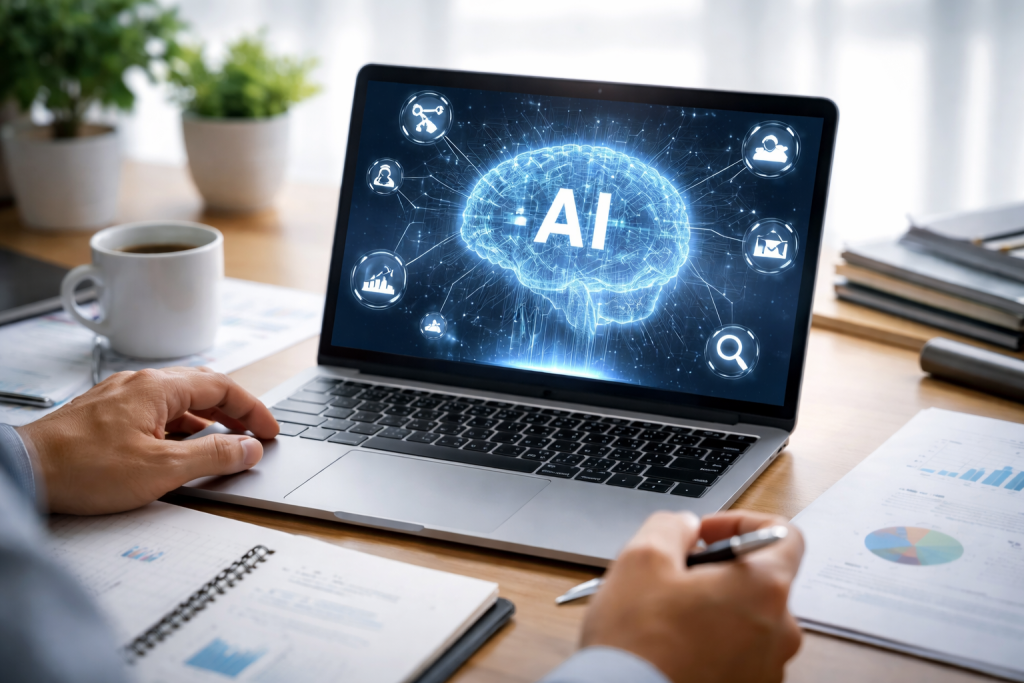
Artificial intelligence refers to the simulation of human intelligence processes by machines. These processes include learning, reasoning, problem-solving, perception, and language understanding. AI is not a singular technology but a broad discipline encompassing various techniques and methodologies.
Distinguishing AI Subfields
AI encompasses several distinct subfields, each with its focus and applications. Machine learning, perhaps the most prominent subfield, involves training algorithms on data to enable them to make predictions or decisions without explicit programming. Within machine learning, different approaches exist, such as supervised learning, where algorithms learn from labeled data, and unsupervised learning, where they identify patterns in unlabeled data. Deep learning, a subset of machine learning, utilizes neural networks with multiple layers to process complex patterns in data, often mimicking the structure and function of the human brain. Natural language processing (NLP) focuses on enabling computers to understand, interpret, and generate human language. Computer vision equips machines with the ability to “see” and interpret visual information from images or videos. Robotics, while often intertwined with AI, involves the design, construction, operation, and application of robots. AI provides the “brain” for these physical systems, allowing them to perceive their environment and make decisions.
AI’s Fundamental Principles
At its core, AI operates on principles of data analysis, pattern recognition, and algorithm execution. AI systems learn from data, identifying correlations and trends that human observers might miss. These learned patterns then inform the system’s decisions or predictions. The quality and quantity of the data used to train an AI system often determines its effectiveness. Bias in training data, for instance, can lead to biased outputs from the AI. The algorithms themselves are sets of rules or instructions that the AI follows to perform its tasks. These algorithms can be straightforward or highly complex, evolving as the AI learns and optimizes its performance.
AI is no longer a futuristic concept; its presence is tangible across a multitude of industries, transforming operations and creating new possibilities.
AI in Healthcare
In healthcare, AI is a powerful tool. It assists in medical imaging analysis, helping radiologists detect subtle anomalies in X-rays, MRIs, and CT scans. AI accelerates drug discovery processes by analyzing vast datasets of chemical compounds to identify potential candidates for new medications. AI also enhances personalized medicine by utilizing algorithms that analyze a patient’s genetic profile, medical history, and lifestyle to suggest customized treatments. AI-powered diagnostic tools can support clinicians in identifying diseases earlier and more accurately. Imagine AI as a seasoned detective, sifting through mountains of data to uncover crucial clues that might otherwise remain hidden.
AI in Finance
The financial sector leverages AI for fraud detection, flagging suspicious transactions in real-time by analyzing spending patterns and anomalies. Algorithmic trading, where AI makes rapid buy and sell decisions based on market data, is a significant application. AI also assists in risk assessment, evaluating loan applications or investment opportunities with greater precision. Customer service in finance is evolving with AI-powered chatbots and virtual assistants, providing instant support and information. Here, AI acts as a vigilant guardian, protecting against fraud and optimizing financial decisions.
AI in Manufacturing and Logistics
In manufacturing, AI optimizes production lines, predicts equipment failures, and ensures quality control. Predictive maintenance, powered by AI, can anticipate when machinery will require service, minimizing downtime and increasing efficiency. Robotics, guided by AI, handles repetitive tasks, improving precision and speed. The logistics industry utilizes AI for route optimization, warehouse management, and demand forecasting, leading to more efficient supply chains. Think of AI as the conductor of a complex orchestra, ensuring every instrument plays in harmony and the entire performance runs smoothly.
As AI’s capabilities grow, so do the discussions surrounding its ethical and social ramifications. Prudent consideration of these implications is paramount.
Bias and Fairness in AI
A critical concern is the potential for bias in AI systems. If the data used to train an AI reflects existing societal biases, the AI will likely perpetuate or even amplify those biases. This can lead to unfair outcomes in areas like hiring, credit scoring, or criminal justice. Addressing bias requires careful curation of training data, development of fairness-aware algorithms, and constant monitoring of AI system performance. Ensuring AI systems are fair and equitable is like designing a set of scales that accurately weighs all objects, regardless of their origin or appearance.
Privacy and Data Security
The development of AI often relies on large quantities of personal data. This raises significant privacy concerns. How is this data collected, stored, and used? Who has access to it? Robust data protection regulations and secure data handling practices are essential to mitigate these risks. The balance between leveraging data for AI advancements and protecting individual privacy is a delicate one. Consider AI’s data appetite as a sponge, absorbing information; we must ensure it only absorbs what is appropriate and does not leak what should remain private.
Job Displacement and the Future of Work
The increasing automation powered by AI raises questions about job displacement. While AI may automate some routine tasks, it also creates new job roles and demands new skills. The focus shifts from performing repetitive tasks to roles involving creativity, critical thinking, and problem-solving alongside AI systems. Education and retraining initiatives are vital to prepare the workforce for this evolving landscape. AI is less a destroyer of jobs and more a sculptor, reshaping the nature of work.
AI is not just a tool; it is a catalyst, driving innovation and reshaping the very fabric of business and technology.
Enhanced Decision-Making
AI provides businesses with enhanced analytical capabilities, allowing for more data-driven and informed decisions. By processing and interpreting vast datasets, AI can uncover insights and trends that might otherwise escape human detection. This leads to more effective strategies, optimized resource allocation, and a deeper understanding of market dynamics. AI serves as a powerful magnifying glass, revealing intricate patterns in the vast ocean of data.
Innovation and Product Development
AI is a driving force behind new product development and service innovation. From intelligent virtual assistants to self-driving cars, AI enables the creation of sophisticated and intuitive technologies. It accelerates research and development, allowing companies to iterate faster and bring novel solutions to market more quickly. AI serves as a creative collaborator, expanding the realm of possibilities.
Operational Efficiency and Cost Reduction
Businesses are using AI to streamline operations, automate repetitive tasks, and reduce costs. This includes optimizing supply chains, predicting equipment maintenance needs, and improving customer service. By automating mundane processes, AI frees up human employees to focus on more complex, strategic endeavors, leading to greater overall efficiency. Here, AI functions as a meticulous accountant, finding ways to optimize resources and minimize waste.
To thrive in an AI-driven world, a foundational understanding of AI is no longer optional. It is essential for individuals and organizations alike.
Empowering the Workforce
Education about AI helps prepare the current and future workforce for roles that will increasingly involve interacting with or managing AI systems. It equips individuals with the skills needed to adapt to technological shifts and leverage AI for their professional growth. This includes developing critical thinking skills to evaluate AI outputs, understanding how AI works, and identifying opportunities for its application. Providing AI education is akin to giving someone a compass in a new and complex landscape; it helps them navigate with confidence.
Informed Public Discourse
A well-informed public is crucial for shaping responsible AI policy and fostering positive societal integration of AI. Understanding the capabilities and limitations of AI helps counter misinformation and unrealistic expectations. It enables individuals to participate in discussions about ethical guidelines, regulations, and the future direction of AI development. An educated populace forms the bedrock of responsible technological advancement.
While challenges exist, the potential for AI to drive future innovation and address global problems is immense.
Addressing Grand Challenges
AI holds promise for tackling some of humanity’s most pressing grand challenges, such as climate change, disease, and poverty. AI can assist in developing sustainable energy solutions, accelerating medical research for cures, and optimizing resource allocation for disaster relief. It offers a powerful lens through which to view complex problems and develop innovative solutions. Think of AI as a specialized toolkit, capable of crafting solutions to intricate global puzzles.
Collaborative Human-AI Systems
The future of AI often involves collaborative human-AI systems, where the strengths of both humans and machines are leveraged. Humans bring creativity, empathy, and contextual understanding, while AI offers processing power, data analysis, and automation. This synergy allows for achievements greater than either could accomplish alone. The ideal is not AI replacing humans, but AI augmenting human capabilities, creating a more capable and efficient partnership.
Implementing AI is not without its hurdles, but the opportunities it presents demand careful consideration and strategic planning.
Overcoming Technical and Data Challenges
Successful AI implementation requires addressing technical challenges, such as integrating AI systems with existing infrastructure, ensuring data quality, and managing computational resources. It also involves careful data governance, ensuring data is collected, stored, and used ethically and securely. Overcoming these technical hurdles requires expertise, investment, and a clear understanding of AI system requirements.
Managing Organizational Change
Introducing AI into an organization often necessitates significant organizational change. This includes adapting workflows, training employees, and fostering a culture that embraces AI. Effective change management strategies are vital to ensure smooth adoption and maximize the benefits of AI. This process is like carefully tending a garden; you must prepare the soil, plant the seeds, and nurture the growth for a bountiful harvest.
The journey with artificial intelligence is ongoing. By understanding its foundational principles, acknowledging its pervasive influence, addressing its ethical implications, and embracing a mindset of continuous learning, we can collectively unlock AI’s potential to shape a more innovative and prosperous future. The power of AI is not in some far-off utopia, but in comprehending its reality today.
FAQs
1. What is artificial intelligence (AI), and why is it important to understand its impact today?
Artificial intelligence (AI) refers to the simulation of human intelligence processes by machines, particularly computer systems. It is important to understand its impact today because AI is increasingly being integrated into various aspects of our lives, from business and technology to healthcare and transportation, and it has the potential to significantly shape our future.
2. How is AI influencing various industries and revolutionizing business and technology?
AI is influencing various industries by enabling automation, predictive analytics, and personalized customer experiences. In business and technology, AI is revolutionizing processes such as data analysis, decision-making, and customer service, leading to increased efficiency and innovation.
The ethical and social implications of AI include concerns about privacy, bias, job displacement, and the potential for misuse of AI technologies. It is important to explore these implications to ensure that AI is developed and used in a responsible and ethical manner and to address any potential negative impacts on society.
4. How can AI be harnessed for future innovation, and what are the challenges and opportunities of AI implementation?
AI can be harnessed for future innovation by fostering collaboration between researchers, industry professionals, and policymakers, as well as by investing in AI education and awareness. The challenges of AI implementation include technical limitations, ethical considerations, and the need for regulatory frameworks, while the opportunities include improved efficiency, new business models, and enhanced decision-making capabilities.
AI education and awareness are important to ensure that individuals and organizations are equipped to understand, develop, and use AI technologies effectively and responsibly. To navigate the potential of AI for future innovation, it is crucial to invest in continuous learning, collaboration, and ethical considerations, and to stay informed about the latest developments in the field of AI.

AI & Secure is dedicated to helping readers understand artificial intelligence, digital security, and responsible technology use. Through clear guides and insights, the goal is to make AI easy to understand, secure to use, and accessible for everyone.