
AI Made Simple: A Non-Technical Overview of Artificial Intelligence and Its Applications
Artificial intelligence, or AI, is a field of computer science. It focuses on creating machines that can perform tasks that typically require human intelligence. This includes learning, problem-solving, decision-making, perception, and understanding language. AI is not a single technology but a broad collection of techniques and algorithms.
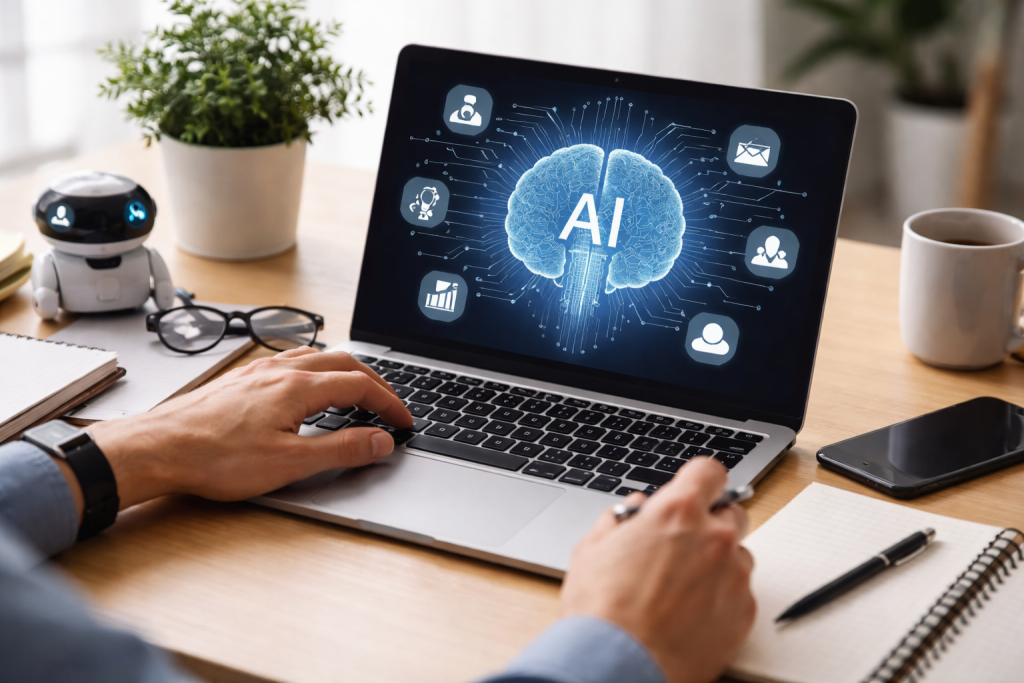
At its core, AI aims to replicate or surpass certain aspects of human cognition. Think of a human brain as a powerful computer. AI tries to build software that can mimic some of that brain’s functions. It allows computers to analyze data, identify patterns, and make predictions or decisions based on what they’ve learned.
Contents
- 0.1 How AI Learns
- 0.2 Personal Assistants and Smart Devices
- 0.3 Recommendations and Personalization
- 0.4 Navigation and Transportation
- 0.5 Narrow AI
- 0.6 General AI
- 0.7 Super AI
- 0.8 Automation and Efficiency
- 0.9 Data Analysis and Insights
- 0.10 Customer Service and Experience
- 0.11 Bias and Fairness
- 0.12 Privacy and Data Security
- 0.13 Accountability and Transparency
- 0.14 Job Displacement
- 0.15 Job Creation
- 0.16 Augmentation and Collaboration
- 0.17 Diagnostics and Disease Detection
- 0.18 Drug Discovery and Development
- 0.19 Personalized Medicine
- 0.20 Robotic Surgery and Assistance
- 1 FAQs
- 1.1 1. What is artificial intelligence (AI), and how does it work?
- 1.2 2. What are the different types of artificial intelligence?
- 1.3 3. How is artificial intelligence impacting everyday life?
- 1.4 4. What are the ethical implications of artificial intelligence?
- 1.5 5. How are businesses leveraging artificial intelligence for success?
How AI Learns
One of the most important aspects of AI is its ability to learn. This learning often happens through large amounts of data. Imagine showing a child hundreds of pictures of cats. Eventually, the child learns to identify a cat, even one they haven’t seen before. Similarly, AI systems are “trained” on vast datasets.
Machine Learning
Machine learning is a core component of many AI systems. It refers to the ability of a computer system to learn from data without explicit programming. Instead of a developer writing a rule for every possible scenario, the system discovers patterns and creates its own rules. This procedure is like teaching a computer to fish instead of giving it a fish every time.
Deep Learning
Deep learning is a specialized type of machine learning inspired by the structure of the human brain. It uses artificial neural networks, which are layers of interconnected nodes that process information. These networks can learn complex patterns in data, making them effective for tasks like image recognition and natural language processing. Imagine it as a more intricate and multi-layered net capable of capturing a broader range of fish.
AI is already present in many aspects of your daily routine, often without you realizing it. From the moment you wake up until you go to sleep, AI systems are working in the background.
Personal Assistants and Smart Devices
Voice assistants like Siri, Alexa, and Google Assistant are AI applications. They understand your voice commands, answer questions, and control smart home devices. When you tell your smart speaker to play music, AI processes your request and executes it.
Recommendations and Personalization
Online services use AI to personalize your experience. When you browse a streaming service, AI suggests movies or shows you might like based on your viewing history. E-commerce sites recommend products based on your past purchases and browsing behavior. Artificial intelligence is like a thoughtful friend who knows your tastes and suggests things you’ll genuinely enjoy.
Mapping applications like Google Maps use AI to calculate the best routes, predict traffic, and estimate travel times. In advanced vehicles, AI assists with features like adaptive cruise control, lane keeping, and even autonomous driving. These systems act as a vigilant co-pilot, constantly optimizing your journey.
AI is not monolithic; various types of AI exist, each with its strengths and limitations. It’s helpful to categorize AI based on its capabilities and intelligence level.
Narrow AI
Narrow AI, also known as weak AI, is designed and trained for a specific task. Most of the AI you encounter today is narrow AI. For example, a chess-playing AI can beat grandmasters, but it cannot write a symphony or understand human emotions. It’s a specialist in one field, not a generalist.
General AI
Artificial General Intelligence (AGI), or Strong AI, is a theoretical type of AI that can understand, learn, and apply intelligence to any intellectual task a human can. AGI would possess common sense, the ability to reason, and the capacity for abstract thought. This type of AI does not yet exist. It’s like a scientific unicorn—a concept we’re striving for but haven’t found.
Super AI
Artificial Superintelligence (ASI) is even more advanced than AGI. It would surpass human intelligence in virtually every field, including scientific creativity, general wisdom, and social skills. ASI remains a highly speculative concept.
Businesses across various sectors are adopting AI to improve efficiency, reduce costs, and create new opportunities. AI acts as a powerful tool, helping companies make better decisions and automate routine tasks.
Automation and Efficiency
Many companies use AI to automate repetitive tasks. This includes data entry, customer service inquiries through chatbots, and manufacturing processes. Automation frees human employees to focus on more complex and creative work. Think of AI as a tireless assistant that handles the mundane, allowing you to focus on the strategic.
Data Analysis and Insights
AI excels at processing and analyzing large volumes of data much faster than humans can. Businesses use AI for market trend analysis, predicting customer behavior, and identifying operational inefficiencies. These insights help companies make data-driven decisions. AI here is a powerful magnifying glass, revealing patterns invisible to the naked eye.
Customer Service and Experience
AI-powered chatbots and virtual agents handle a significant portion of customer interactions. They provide instant support, answer frequently asked questions, and guide customers through processes. This improves customer satisfaction and reduces the workload on human support staff.
As AI becomes more integrated into society, important ethical questions arise. It’s crucial to consider the potential societal impact of AI development and deployment.
Bias and Fairness
AI systems are trained on data. If that data contains biases (e.g., historical discrimination or underrepresentation of certain groups), the AI system can learn and perpetuate those biases. These behaviors can lead to unfair outcomes in areas like hiring, lending, or criminal justice. Addressing bias in AI is like pruning a tree; you need to remove the unhealthy parts to ensure balanced growth.
Privacy and Data Security
AI systems often require vast amounts of personal data to function effectively. Concerns arise regarding data privacy, the collection, storage, and use of personal information, and the possibility of data breaches. Protecting valuable information requires robust measures to ensure data security.
Accountability and Transparency
When an AI system makes a decision that has significant consequences, who is accountable? Understanding how AI systems arrive at their conclusions (the “black box” problem) is also a challenge. It is crucial to ensure transparency and explainability in AI, thereby shedding light on its operations and making them more comprehensible.
AI and automation are changing the landscape of the job market. AI may automate some jobs, but it also generates new roles and opportunities.
Job Displacement
Certain routine and repetitive tasks are highly susceptible to automation. This may lead to job displacement in sectors like manufacturing, administrative support, and customer service. However, historically, technological advancements have always led to shifts in employment.
Job Creation
AI also creates new jobs in areas like AI development, data science, AI ethics, and roles that involve human-AI collaboration. New industries and services built around AI will emerge. Think of AI as a new tool in the toolbox, requiring skilled workers to build, maintain, and utilize it.
Augmentation and Collaboration
Instead of replacing humans, AI often augments human capabilities. AI tools can assist professionals in fields like medicine, law, and design, making them more productive and efficient. This collaborative model positions AI as a powerful assistant, not a replacement.
AI is transforming the medical industry, offering new ways to diagnose diseases, develop treatments, and improve patient care. AI acts as a sophisticated medical instrument, enhancing the capabilities of healthcare professionals.
Diagnostics and Disease Detection
AI algorithms can analyze medical images (X-rays, MRIs, and CT scans) to detect subtle signs of diseases, sometimes more accurately and quickly than humans. This assists radiologists and pathologists in making earlier and more precise diagnoses. It’s like having another pair of high-powered eyes examining medical data.
Drug Discovery and Development
AI accelerates the drug discovery process by analyzing vast chemical databases, predicting the effectiveness of potential drug candidates, and optimizing molecular structures. This drastically reduces the time and cost associated with bringing new medicines to market. AI here is a super-chemist, rapidly experimenting with countless molecular combinations.
Personalized Medicine
AI allows for highly personalized treatment plans. By analyzing a patient’s genetic information, medical history, and lifestyle data, AI can predict how they will respond to different therapies, leading to more effective and tailored treatments. The outcome is providing a custom-made solution for each patient, rather than a one-size-fits-all approach.
Robotic Surgery and Assistance
AI-powered robotic systems assist surgeons during complex procedures, enhancing precision and minimizing invasiveness. AI also helps manage hospital operations, optimizing resource allocation and improving overall efficiency. These robots act as incredibly steady and precise hands for surgeons.
AI is a rapidly evolving field. Its impact is already significant and will continue to grow across nearly all aspects of human endeavor. Understanding its fundamentals, applications, and implications is crucial for navigating our increasingly AI-driven world.
FAQs
1. What is artificial intelligence (AI), and how does it work?
Machines programmed to think and act like humans simulate human intelligence through artificial intelligence (AI). This includes learning, problem-solving, and decision-making. AI works by using algorithms to analyze data, recognize patterns, and make predictions or decisions based on it.
2. What are the different types of artificial intelligence?
There are three main types of artificial intelligence: narrow or weak AI, general or strong AI, and artificial superintelligence. Narrow AI is designed for a specific task, such as virtual assistants or recommendation systems. General AI is more advanced and can perform any intellectual task that a human can do. Artificial superintelligence refers to AI that surpasses human intelligence in every aspect.
3. How is artificial intelligence impacting everyday life?
Artificial intelligence is impacting everyday life in various ways, such as through virtual assistants like Siri and Alexa, personalized recommendations on streaming platforms, fraud detection in banking, and autonomous vehicles. AI is also being used in healthcare for disease diagnosis and treatment recommendations.
4. What are the ethical implications of artificial intelligence?
The ethical implications of artificial intelligence include concerns about privacy, bias in AI algorithms, job displacement due to automation, and the potential misuse of AI for malicious purposes. There are ongoing discussions and efforts to address these ethical concerns and ensure that AI is developed and used responsibly.
5. How are businesses leveraging artificial intelligence for success?
Businesses are leveraging artificial intelligence for success by using AI-powered analytics for data-driven decision-making, implementing chatbots for customer service, automating repetitive tasks, and improving efficiency in various processes. Manufacturers are also using AI for predictive maintenance and to optimize supply chain management.

AI & Secure is dedicated to helping readers understand artificial intelligence, digital security, and responsible technology use. Through clear guides and insights, the goal is to make AI easy to understand, secure to use, and accessible for everyone.