
The Future is Now: Real-Life Examples of Artificial Intelligence in Everyday Life
Artificial intelligence (AI), once confined to science fiction, is now a tangible force shaping our daily lives. Its presence is no longer a futuristic concept but a present reality, impacting industries and individual experiences alike. This article explores several key areas where AI integration is already evident, demonstrating its practical applications and ongoing evolution.
AI is significantly altering the landscape of healthcare, offering tools that enhance diagnostic accuracy and personalize treatment plans. Imagine, for instance, a physician reviewing a patient’s medical imaging. Historically, this process relied solely on human observation and expertise. With AI, however, that primary human analysis is augmented.
Contents
- 0.1 Accelerating Diagnostics through Image Analysis
- 0.2 Personalized Treatment Protocols
- 0.3 Drug Discovery and Development
- 0.4 The Rise of Autonomous Vehicles
- 0.5 Optimizing Traffic Flow and Infrastructure
- 0.6 Crafting Personalized Shopping Journeys
- 0.7 Intelligent Inventory and Supply Chain Optimization
- 0.8 Fortifying Against Fraud
- 0.9 Refining Investment Strategies
- 0.10 Automating the Domestic Environment
- 0.11 Enhancing Energy Management
- 0.12 Personalized Learning Pathways
- 0.13 Intelligent Tutoring Systems and Student Support
- 1 FAQs
- 1.1 1. What are some real-life examples of artificial intelligence in everyday life?
- 1.2 2. How is AI revolutionizing diagnostics and treatment in healthcare?
- 1.3 3. What are the benefits of AI in transportation, particularly in autonomous vehicles and traffic management?
- 1.4 4. How does AI contribute to personalized shopping experiences and inventory management in retail?
- 1.5 5. In what ways does AI support personalized learning and student support in education?
Accelerating Diagnostics through Image Analysis
AI algorithms, trained on vast datasets of medical images such as X-rays, MRIs, and CT scans, can identify subtle patterns and anomalies that might elude the human eye. Consider the detection of early-stage cancers. An AI system might flag microscopic changes in tissue long before they become apparent through traditional methods. This early detection is not merely an improvement; it is a critical shift, often meaning the difference between successful intervention and advanced disease. For radiologists, AI acts as a sophisticated co-pilot, sifting through mountains of visual data to highlight areas of concern, thereby streamlining their workflow and potentially reducing diagnostic errors. This capability extends beyond oncology to areas like ophthalmology, where AI can identify signs of diabetic retinopathy, and pathology, where it assists in analyzing tissue samples.
Personalized Treatment Protocols
Beyond diagnosis, AI contributes to more effective treatment strategies. Healthcare is inherently individual. What works for one patient may not be optimal for another. AI’s strength lies in its ability to process copious amounts of patient data—genetic information, medical history, lifestyle factors, and treatment responses—to suggest highly individualized therapies. For example, in oncology, AI can analyze a patient’s tumor genetics to predict their likely response to various chemotherapy drugs, guiding oncologists toward the most effective regimen. This shifts healthcare from a universal approach to a highly personalized one, where each patient receives care specifically tailored to their unique biological profile. Looking at pharmacogenomics, AI can predict adverse drug reactions based on an individual’s genetic makeup, minimizing harmful side effects and improving patient safety.
Drug Discovery and Development
The lengthy and expensive process of drug discovery and development is also undergoing an AI-driven transformation. Traditionally, this process involves extensive trial and error, screening countless compounds to find potential drug candidates. AI can accelerate this by identifying promising molecules and predicting their interactions with biological targets. It can simulate drug behavior at a molecular level, reducing the need for costly and time-consuming laboratory experiments. This computational approach allows researchers to explore a much larger chemical space, potentially leading to the rapid development of new therapies for diseases currently lacking effective treatments.
The way we move people and goods is undergoing a fundamental change, with AI serving as the engine for intelligent transportation systems. Imagine your commute not as a stop-and-go struggle but as a seamless, optimized journey. This vision relies heavily on AI.
The Rise of Autonomous Vehicles
Autonomous vehicles, or self-driving cars, are perhaps the most visible manifestation of AI in transportation. These vehicles use a complex interplay of sensors, cameras, radar, and lidar to perceive their environment. AI algorithms then process this sensory input in real-time, essentially creating a detailed, dynamic map of the surroundings. This allows the vehicle to detect other cars, pedestrians, traffic signs, and obstacles, and to make decisions regarding speed, braking, and steering. The promise of autonomous vehicles extends beyond convenience. Reduced human error, a primary cause of road accidents, could significantly improve road safety. Furthermore, optimized driving patterns dictated by AI could lead to increased fuel efficiency and reduced emissions. The journey from human-driven to AI-driven vehicles is a complex one, involving continuous refinement of AI models, extensive testing, and the development of robust regulatory frameworks.
Optimizing Traffic Flow and Infrastructure
Beyond individual vehicles, AI is poised to revolutionize traffic management across entire urban networks. Picture a city where traffic jams become a rarity, where signals adapt in real-time to current conditions rather than following rigid schedules. AI-powered systems analyze real-time traffic data from cameras, sensors, and vehicle GPS. This data is then used to predict traffic patterns and dynamically adjust traffic light timings, optimize lane usage, and even suggest alternative routes to drivers. This proactive approach can alleviate congestion, reduce travel times, and minimize fuel consumption. For instance, during peak hours or in response to an accident, AI can intelligently reroute traffic to maintain a smoother flow. This is not about simply reacting to traffic; it is about anticipating and preventing congestion, making city navigation a more fluid experience for everyone.
The retail sector, from online storefronts to brick-and-mortar establishments, is embracing AI to enhance customer experiences and streamline operations. Consider your last online shopping trip. The recommendations you received and the ease of finding specific items are largely supported by AI.
Crafting Personalized Shopping Journeys
AI is a powerful tool for understanding individual customer preferences and tailoring the shopping experience accordingly. Imagine walking into a store where the layout subtly adapts to your past purchases and browsing history, or an online platform that suggests products you genuinely want, not just generic bestsellers. Recommendation engines, a cornerstone of e-commerce, use AI to analyze your browsing history, purchase patterns, and even explicit feedback, comparing it with the behavior of millions of other users. This allows them to predict what you might be interested in, vastly improving product discovery. This personalization extends to dynamic pricing, where AI can adjust prices in real-time based on demand, competitor pricing, and individual customer profiles, optimizing sales and revenue. Chatbots, powered by natural language processing (NLP), provide instant customer support, answering queries, guiding shoppers, and even processing returns, effectively acting as 24/7 customer service representatives.
Intelligent Inventory and Supply Chain Optimization
For retailers, managing inventory efficiently is a delicate balancing act. Too much stock ties up capital and risks obsolescence; too little leads to lost sales. AI offers a solution to this perennial challenge. By analyzing historical sales data, seasonal trends, promotions, and external factors like weather forecasts or economic indicators, AI can forecast demand with remarkable accuracy. This allows retailers to optimize their inventory levels, ensuring products are available when and where customers want them, without incurring excessive holding costs. Furthermore, AI can optimize the entire supply chain, from sourcing raw materials to delivering products to the customer’s doorstep. It can identify the most efficient shipping routes, predict potential disruptions, and even manage warehouse automation, leading to reduced operational costs, faster delivery times, and a more resilient supply chain.
The financial industry, characterized by vast amounts of data and the need for precision, is a prime candidate for AI integration. AI is enhancing security and informing complex financial decisions. Think of your bank safeguarding your money or investment managers making critical market calls.
Fortifying Against Fraud
One of AI’s most impactful applications in finance is fraud detection. Financial institutions handle billions of transactions daily, making manual fraud detection impractical. AI systems, however, are adept at identifying anomalous patterns that often signify fraudulent activity. These systems analyze vast datasets of transaction history, user behavior, and network data to establish normal patterns. When a transaction deviates significantly from these established norms—for example, a large purchase made from a new location immediately after a series of small, routine transactions—the AI flags it for further investigation. This allows banks to prevent fraudulent transactions in real-time, protecting both the institution and its customers. It’s a continuous learning process; as new fraud schemes emerge, the AI adapts and refines its detection capabilities, acting as a tireless guardian against financial malfeasance.
Refining Investment Strategies
The world of investments is fraught with uncertainty and requires sophisticated analytical capabilities. AI provides these capabilities, offering insights that can inform more effective investment strategies. AI algorithms can process and analyze market data at speeds and scales impossible for humans. This includes not just numerical data like stock prices and trading volumes, but also unstructured data such as news articles, social media sentiment, and economic reports. By identifying correlations and predicting market movements, AI can assist fund managers in constructing optimized portfolios, risk assessment, and algorithmic trading. For instance, AI can identify undervalued assets, predict shifts in market sentiment before they become widely apparent, or even execute trades automatically based on predefined criteria. This does not replace human expertise but rather augments it, providing powerful analytical tools to navigate the complex and volatile financial markets.
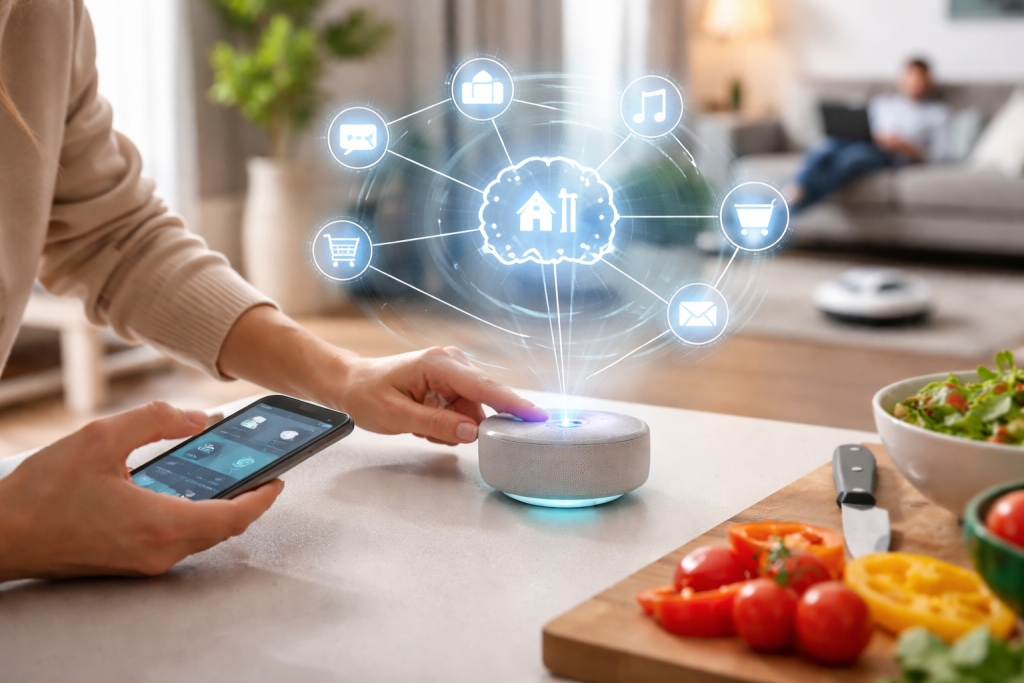
Our homes are becoming smarter, more responsive environments thanks to the integration of AI. Imagine returning to a home that anticipates your needs and manages its resources intelligently. This is the promise of AI in smart homes.
Automating the Domestic Environment
AI is transforming homes into intuitive living spaces that respond to inhabitants’ preferences and routines. Beyond simple remote control, AI enables genuine home automation. Consider a smart thermostat that not only adjusts temperature based on a schedule but also learns your habits over time. It can anticipate when you’ll be home, detect open windows, and factor in external weather conditions to maintain optimal comfort while minimizing energy consumption. Smart lighting systems can adapt to natural light levels, turn lights on or off based on room occupancy, or even create personalized lighting scenes for different activities. Voice assistants, powered by advanced natural language processing, serve as central command centers, allowing you to control various devices, play music, or retrieve information through simple spoken commands, streamlining daily tasks and enhancing convenience.
Enhancing Energy Management
Energy efficiency is a critical concern for many homeowners, and AI offers potent solutions. By continuously monitoring energy consumption across various appliances and systems, AI can identify patterns of waste and suggest optimizations. For example, it might detect that your refrigerator is overworking due to a faulty seal and alert you. Beyond detection, AI can actively manage energy usage. It can integrate with smart grids, automatically shifting energy-intensive tasks to off-peak hours when electricity is cheaper and demand is lower. It can also manage solar panel output and battery storage, ensuring that renewable energy is utilized efficiently and homes are resilient to power outages. This intelligent energy management not only reduces utility bills but also contributes to a more sustainable energy ecosystem.
The realm of education is undergoing a significant transformation with AI, moving towards more personalized and engaging learning experiences. Imagine a classroom where every student receives instruction perfectly suited to their individual learning style and pace.
Personalized Learning Pathways
No two students learn exactly alike. AI allows for the creation of truly personalized learning pathways, moving away from a uniform curriculum. Adaptive learning platforms, powered by AI, assess a student’s current understanding, identify their strengths and weaknesses, and then dynamically adjust the learning material and pace. If a student struggles with a concept, the AI can provide additional exercises, different explanations, or recommend supplementary resources. Conversely, if a student grasps a concept quickly, the AI can fast-track them to more advanced topics. This ensures that each student is challenged appropriately, remaining engaged and motivated, rather than being bored by material too simple or frustrated by material too complex. It’s like having a dedicated tutor who understands your exact learning profile.
Intelligent Tutoring Systems and Student Support
AI-driven tutoring systems can provide immediate feedback and support, acting as virtual teaching assistants. These systems can answer student questions, provide hints for problem-solving, and even explain complex concepts in multiple ways. This on-demand support is particularly valuable in subjects where students often encounter specific hurdles, providing assistance exactly when it’s needed. Furthermore, AI can take on administrative tasks for educators, such as grading quizzes, analyzing student performance data, or even identifying students who might be at risk of falling behind. By automating these routine tasks, AI frees up teachers to focus on more impactful activities, such as designing engaging lessons and providing individualized mentorship. It transforms the educator’s role from a sole dispenser of information to a facilitator of personalized learning experiences.
FAQs
1. What are some real-life examples of artificial intelligence in everyday life?
Some real-life examples of artificial intelligence in everyday life include virtual assistants like Siri and Alexa, personalized recommendations on streaming platforms like Netflix, and smart home devices that can automate tasks and adjust energy usage.
2. How is AI revolutionizing diagnostics and treatment in healthcare?
AI is revolutionizing diagnostics and treatment in healthcare by enabling more accurate and efficient diagnosis through medical imaging analysis, predicting patient outcomes, and personalizing treatment plans based on individual patient data.
3. What are the benefits of AI in transportation, particularly in autonomous vehicles and traffic management?
The benefits of AI in transportation include improved safety through advanced driver assistance systems, reduced traffic congestion through optimized traffic management, and increased efficiency in logistics and delivery services through autonomous vehicles.
4. How does AI contribute to personalized shopping experiences and inventory management in retail?
AI contributes to personalized shopping experiences in retail by analyzing customer data to provide tailored product recommendations and offers, while also optimizing inventory management through demand forecasting and supply chain optimization.
5. In what ways does AI support personalized learning and student support in education?
AI supports personalized learning and student support in education by providing adaptive learning platforms that cater to individual student needs, automating administrative tasks to free up educators’ time, and enabling early intervention through predictive analytics for at-risk students.

AI & Secure is dedicated to helping readers understand artificial intelligence, digital security, and responsible technology use. Through clear guides and insights, the goal is to make AI easy to understand, secure to use, and accessible for everyone.